



Bitcoin (BTC)’s Coinbase Premium Index is -0.008 for the first time in three weeks, indicating a sharp decline in US spot market demand, consistent with BTC’s current price decline. This signal held across hourly readings through the next 48 hours, indicating consistent selling pressure from US-based buyers. This change comes as the net weekly average of BTC realized losses rose to $829 million, suggesting a decline in investor confidence.
Bitcoin Coinbase Premium Index. Source: CryptoQuant
Cryptocurrency trader Aldi highlighted a break in both trendline support and the $77,300 liquidity zone. The trader linked the move to weakening spot demand, noting that this is the first time premiums have recorded back-to-back losses since Bitcoin hit around $67,000.
Aldi said price trends during the Federal Open Market Committee (FOMC) meeting remain volatile and can move quickly in either direction. Traders are likely to focus on the $74,500-$75,500 range as the key downside area related to demand depletion.
On-chain data is added to this view. Cryptocurrency analyst Dirkforst noted that weekly realized losses amounted to a seven-day average of $829 million, compared to realized gains of $566 million. Net realized profits briefly turned positive on April 9, but reversed within two weeks.
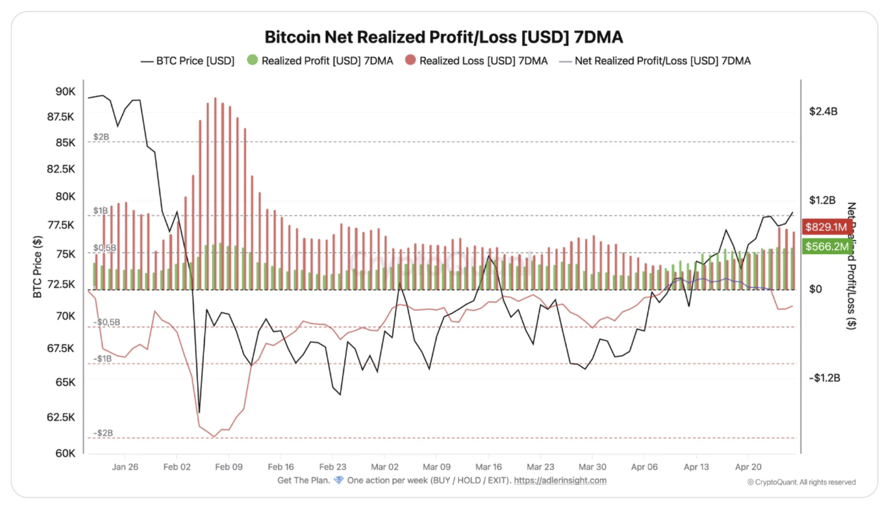
Bitcoin Net Realized Gain/Loss (USD) 7DMA. Source: CryptoQuant
Supply as a percentage of profits has reached 64%, a level that historically has not supported sustained upside. This shows that holder confidence is waning despite the recent rally.
Related article: $100 oil raises new fears of Asian crisis, Bitcoin price hits one-week low
Bitcoin sales on Binance reach $828 million
Derivatives data shows strong sell-side activity on Binance. Cryptocurrency analyst Amr Taha noted that the 24-hour cumulative net taker volume on April 27th decreased by $828 million, the lowest since late March.
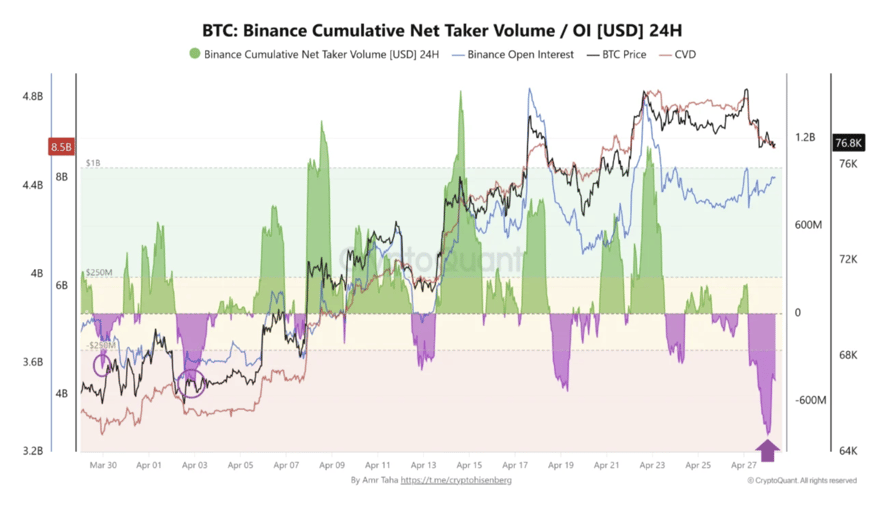
Cumulative net taker amount of BTC on Binance. Source: CryptoQuant
Negative net taker volume indicates that sell orders in the market exceed buy orders. Binance’s taker-buy ratio also fell to 0.89, a level last recorded on March 29th.
This early number coincided with a local pivot when Bitcoin tested $66,000 and then rebounded 15% over the past 30 days.
Current measurements bring both indicators back near the previous depletion zone. Taha explained that this setup is more like a short-term capitulation than a breakdown in a larger trend.
Related: Could Bitcoin Reach $250,000 This Year? Traders say it may be time to ‘sell in May’
