


Concerns Arise Over Proposed European Security Talks Amidst Ongoing Ukraine Conflict
LONDON — European nations expressing a desire for greater involvement in Ukraine peace negotiations may not have expected how these discussions would evolve. Historically, Europe has feared a lack of participation that could lead to unfavorable terms for Ukraine, particularly as President Vladimir Putin of Russia prepares for a significant three-way meeting with U.S. President Donald Trump and Chinese leader Xi Jinping in Shenzhen, China.
While it has recently been reported that the United States aims to involve European nations more closely in future diplomatic engagements, there are growing concerns about a new proposition from Trump’s administration: that the broader landscape of European security might also be ripe for negotiation. This proposal aligns closely with longstanding demands from Moscow for discussions about reshaping Europe’s security framework.
European Officials Voice Concerns
To Putin, the idea of redrawing Europe’s security architecture means reducing NATO’s influence, which he argues is necessary to rectify perceived injustices following the Soviet Union’s fall. European leaders have criticized this suggestion, cautioning that such a move risks playing into Russia’s agenda. Kaja Kallas, the E.U. foreign policy chief, articulated the alarm, stating that Washington could be “walking into Moscow’s trap.”
This sentiment was echoed by former Estonian President Toomas Hendrik Ilves, who described the proposal as “bizarre.” The proposal’s origins are unclear, especially since similar calls from the Kremlin had already been dismissed prior to Russia’s full-scale invasion of Ukraine.
U.S. Officials Push for Comprehensive Security Talks
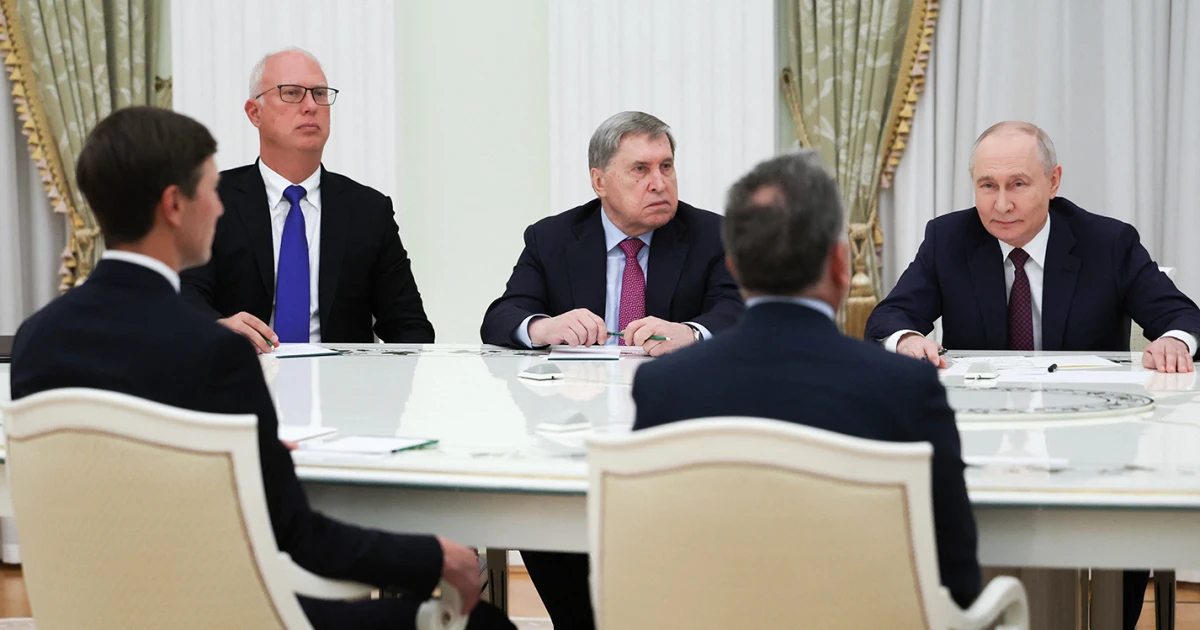
In a recent statement, Jared Kushner, an envoy for the U.S., indicated that the peace talks should extend beyond the immediate conflict to include broader European security frameworks. He reflected on the historical context of mistrust and emphasized the necessity for a robust security arrangement in Europe that still acknowledges NATO’s centrality in defense matters. Kushner maintained that no nation should have a veto over the alliances of others.
Trump has also hinted at a potential “big agreement” that could involve significant elements beyond Ukraine, causing unease among European leaders who worry this might align too closely with Russia’s objectives. European officials have reacted with apprehension, viewing the proposal as potentially echoing Putin’s most extreme war demands.
Historical Context and Current Dynamics
Kushner’s framing of Russia and Europe as “neighbors” attempting to resolve their differences does not reflect recent history accurately. Notably, Russia annexed Crimea in 2014 and launched a full-scale invasion of Ukraine in early 2022, with a history of cyberattacks and disinformation campaigns aimed at the West. There is a prevailing fear among European nations that the U.S. could prioritize a deal that might inadvertently embolden Russian aggression.
- Ilves remarked, “Why are two real estate agents pushing this idea?” referring to Kushner and another envoy, Steve Witkoff.
- He expressed skepticism regarding the diplomatic credentials of the U.S. representatives, suggesting they might lack a comprehensive understanding of European security history.
European officials have also voiced strong opposition to the notion of revising the existing security architecture in Europe. Kallas labeled Russia’s maximalist demands as “really absurd,” and German Foreign Minister Johann Wadephul stressed that Europe’s security structure is already in place and does not require a new framework. Lithuanian Foreign Minister Kęstutis Budrys affirmed that the core issue lies not in the rules but in Russia’s violations of them.
Ukraine’s Perspective on Security Arrangements
Ukrainian President Volodymyr Zelenskyy described the proposed discussions as “dangerous,” asserting that European security should not dominate the agenda. Ukraine argues that given Russia’s ongoing war efforts, Moscow should not be in a position to make demands regarding European security. Ukrainian Foreign Minister Andriy Sybiha stated that at this stage, Russia should only be negotiating a ceasefire along the current contact line.
Additionally, Kyiv and its European allies believe that a ceasefire must precede any peace negotiations. They accuse Russia of using ongoing talks to stall and continue its attacks as the winter season approaches.
Conclusion: Path Forward for Peace Talks
The proposition for a broader discussion on European security remains contentious, with many fearing that yielding to Russian demands could reshape the security landscape unfavorably. The ongoing negotiations in Abu Dhabi between the U.S., Russia, and Ukraine did not yield significant advancements, indicating that a resolution to the conflict is still a distant goal.
Moving forward, both Russia and the U.S. have signaled a willingness to allow European countries a role in negotiations, though clarity on their specific contributions is still needed.
As this complex geopolitical dynamic continues to evolve, maintaining a united European front against any potential concessions that could undermine their security architecture remains critical.
