


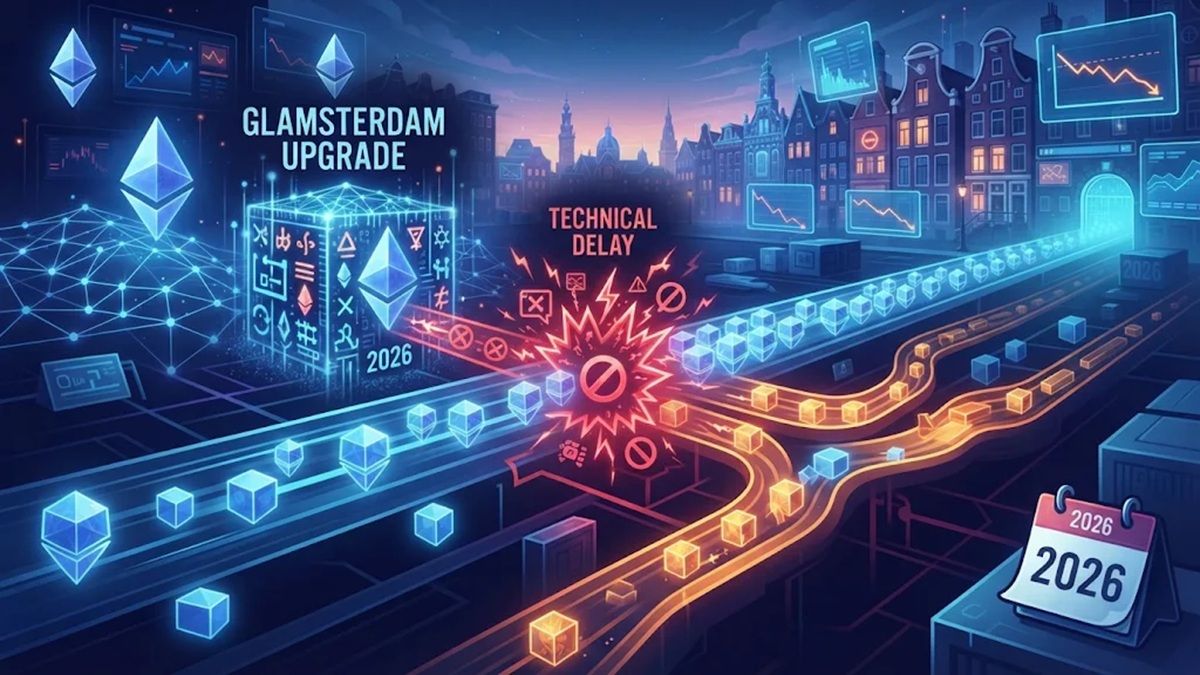
As the Ethereum network continues to solidify its role as a principal settlement platform for digital assets and decentralized finance (DeFi), critical aspects such as transaction speed, network fees, and reliability of settlements remain at the forefront for both individual users and institutional participants. With November 2026 underway, attention is shifting towards the upcoming protocol upgrade, which has faced technical scrutiny during recent testing phases.
Snapshot of Ethereum as of November 21, 2026:
Price upon publication: $1,636 at 09:35 UTC
Past 7 days: −14.2% Change since publication: +2.9%
All-time high: −66.9% ($4,946)
Transaction Speed on Ethereum: Influences and Implications
Ethereum’s blockchain operates on a 12-second block creation cycle; however, this timing does not assure immediate inclusion for transactions. Factors such as network congestion, user-set gas limits, and validator availability heavily influence transaction processing times.
Once a transaction is included in a block, it begins the confirmation process as subsequent blocks get added to the chain. Under typical conditions, reaching finality on Ethereum can take about 13 minutes, enhancing security against potential transaction reversals that could arise from standard blockchain reorganizations.
This distinction is particularly relevant for exchanges and financial entities, as they often have tailored deposit requirements. A transaction might show as successful on a block explorer like Etherscan, while the receiving platform may still be awaiting additional confirmations or conducting internal validations.
The introduction of the EIP-1559 transaction fee structure further complicates the landscape. Users set a maximum fee limit and a priority fee, with the protocol burning the base fee and compensating the block proposer with the priority fee. Increased network activity can lead to heightened transaction costs and potential delays if fee ceilings are not met.
To address scalability, Layer 2 solutions like Optimistic and zero-knowledge rollups process transactions off the main Ethereum chain while still relying on it for security and settlement. The specifics of confirmation timing and withdrawal processes depend on the underlying technologies of these networks.
Glamsterdam Upgrade: Navigating Technical Challenges Prior to Mainnet Launch
The Glamsterdam upgrade presents a key focus for Ethereum’s development in 2026. This upgrade aims to incorporate significant enhancements, including a framework for proposer-builder separation and block-level access lists, aimed at facilitating parallel execution and expanding Layer 1 capabilities.
However, concerns regarding compatibility have arisen during tests conducted in November. On the 6th, the Ethereum Foundation highlighted that EIP-8037 and EIP-8038 could potentially disrupt existing smart contracts, which depend on specific execution and gas-related assumptions. By November 9, developers identified several deployed contracts that might be vulnerable.
In light of these issues, core developers delayed the planned Hoodi testnet activation. A new date for this activation is yet to be announced, though the AllCoreDevs meeting on November 19 is expected to delve into the audit outcomes and potential revisions to specifications.
Long-Term Scaling Strategy: Efficiency at the Core
Despite the recent setbacks, the technical goals associated with the Glamsterdam upgrade remain critical. By pushing for parallel processing, refining block construction, and enhancing state-related fee precision, Ethereum aims to significantly boost its capacity to handle increased on-chain transactions.
Building on the foundation established by the previous Fusaka upgrade, which went live in December 2025 and improved rollup scalability, Glamsterdam seeks to further enhance efficiency in Layer 1 operations.
For investors in ETH, understanding the difference between technical advancements and actual implementations is vital. Comprehensive testing and compatibility evaluations will need to precede any move to mainnet activation.
Ethereum’s development trajectory emphasizes scalability, but it remains committed to its core tenets of decentralization and security. Addressing the compatibility challenges presented by the Glamsterdam upgrade will be crucial to ensuring a more efficient network while safeguarding the existing smart contracts and applications currently in use within its expansive ecosystem.
Notice: The information provided is for informational purposes only and should not be considered as investment advice.
