


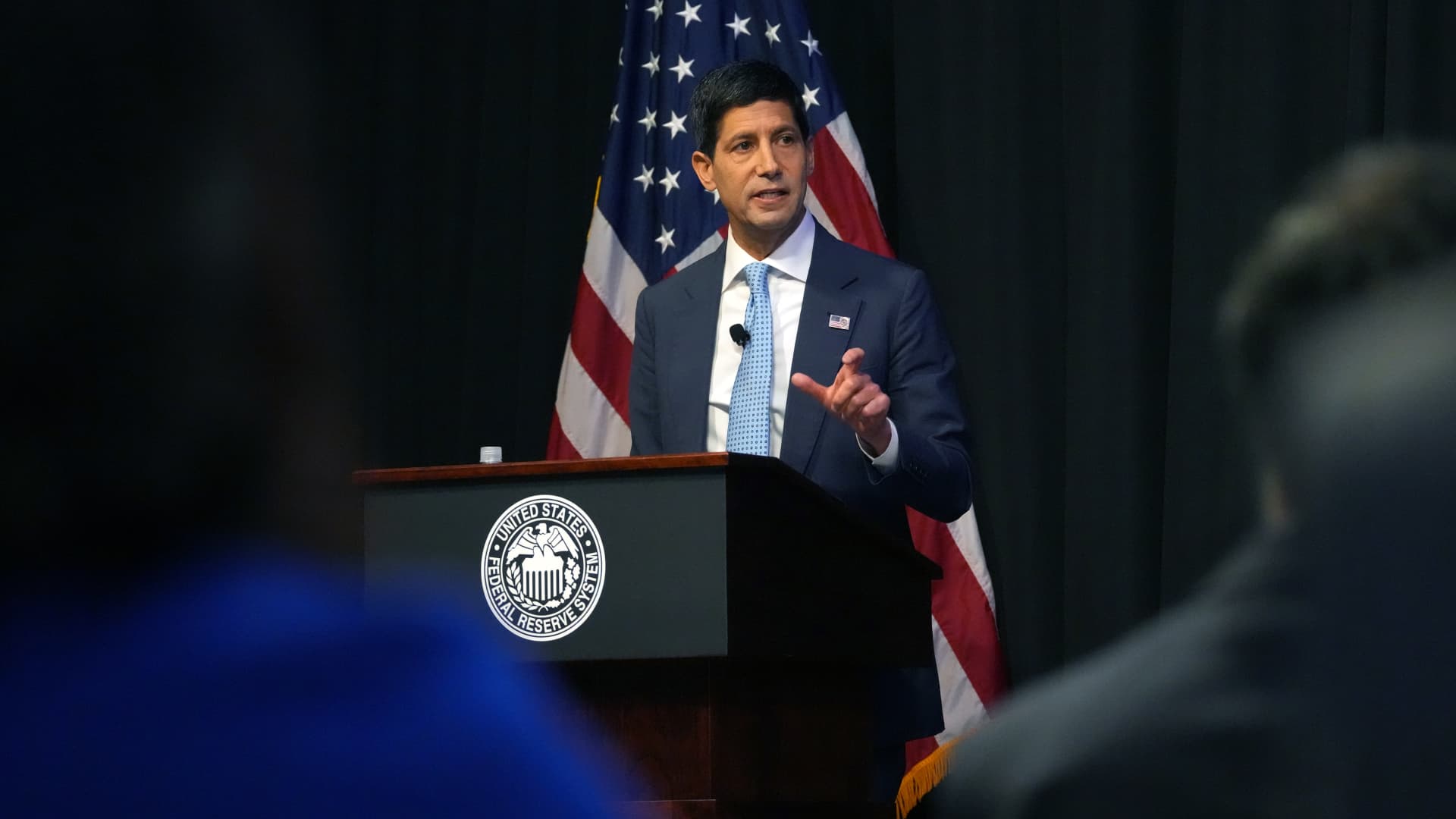
As artificial intelligence (AI) rapidly advances, its implications for the U.S. economy are starting to attract significant attention from policymakers, notably the Federal Reserve. Fed Chairman Kevin Warsh recently convened a conference in San Francisco to address potential impacts of AI on economic structures, labor markets, and price inflation.
In his address, Warsh emphasized that the United States is at a critical juncture regarding its economic future. While he did express concerns about possible job losses among white-collar workers, he opted to leave in-depth predictions to the experts assembled for the task force. The swift pace of technological development means that Warsh will soon need to articulate clearer positions on these issues.
In a significant financial milestone, AI lab Anthropic is set to price shares for its initial public offering, which could yield up to $64 billion at an anticipated valuation of $1.4 trillion. The burgeoning investments in AI are under consideration by the Fed, which is contemplating an interest rate hike in December. This move aims to temper inflation as the tech sector stimulates economic activity.
Public sentiments towards AI are showing signs of skepticism. In conjunction with the recent midterm elections, voters implemented numerous state-level regulations limiting the establishment of data centers vital for AI operations. Gina Raimondo, a former commerce secretary under President Biden, indicated that this trend could severely hinder progress, stating that stopping AI development would be detrimental not only to economic growth but also to the individuals advocating these limitations.
At the conference, Warsh participated actively in moderating discussions and selecting speakers, aiming to bring in fresh perspectives from outside the central bank. Unlike the traditional reliance on in-house economists, this approach signals a broader effort to tackle the evolving challenges posed by AI.
The task force included prominent figures such as venture capitalist Marc Andreessen, who expressed optimism about AI’s potential; however, he noted that excessive regulation in critical fields like healthcare and education could prevent full realization of AI’s capabilities. He remarked, “To the extent our economy is a free-market economy, then maybe you could see the, let’s say, extremely rapid displacement scenarios people are talking about,” suggesting that regulatory environments could hinder such transitions.
Warsh drew comparisons to the “China shock” that followed China’s entry into the World Trade Organization in 2001, which wrought significant job losses while benefiting consumers through lower prices. He posited that a similar phenomenon might occur with AI, particularly impacting service-related employment by potentially delivering services at a lower cost than humans.
In inquiries directed at panelists, Warsh explored the possibility of AI leading to deflation within certain sectors. While the panelists suggested this outcome is feasible, it raises questions about long-term monetary policy adjustments. Ultimately, the Fed will need to determine a clear direction in response to these developments.
Moving forward, the task force’s findings are expected to be compiled into a report for Warsh in the next few months. This report will serve as a basis for discussions among Fed members regarding potential adjustments in monetary policy, addressing how the proliferation of AI may require timely decision-making as its influence continues to grow.
