


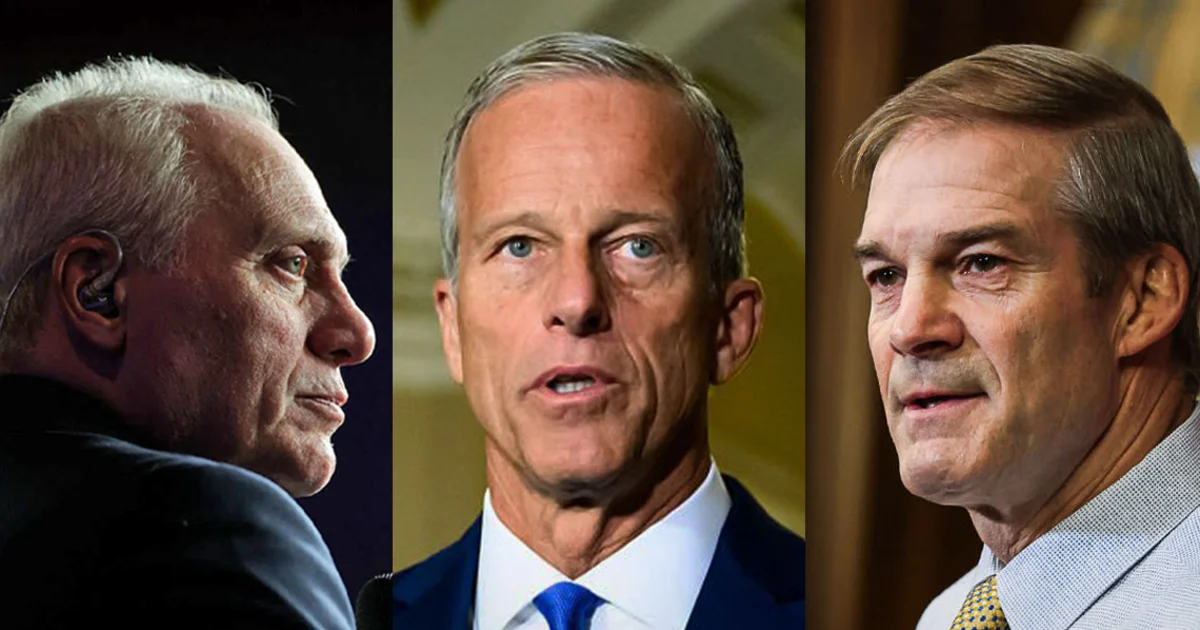
In the wake of significant losses in the recent midterm elections, House and Senate Republicans are set to convene on Tuesday to determine their leadership for the upcoming Congress. The shift in power dynamics has paved the way for a potential reshuffling among key positions as party members grapple with the implications of the election results.
The Leadership Contest in the House
Following House Speaker Mike Johnson’s decision not to pursue a minority leadership role, the race for his succession has heated up between two prominent figures: Majority Leader Steve Scalise of Louisiana and Judiciary Committee Chairman Jim Jordan from Ohio.
Scalise, who is seen as a unifying figure within the party, has articulated his vision of countering the Democratic agenda and embracing party cohesiveness. In contrast, Jordan, a founding member of the House Freedom Caucus, positions himself as a staunch opponent of Democratic inquiries into the previous administration, emphasizing his experience in oversight.
The election for minority leader will proceed through a secret ballot, with candidates presenting their cases to fellow members starting at 9 a.m. ET before the votes are cast later in the day. The winner must secure a majority to claim the role.
Moreover, Majority Whip Tom Emmer from Minnesota is vying for his position again but faces a significant challenge from Texas Congressman August Pfluger, who is aligned with the Republican Study Committee. Additionally, current House GOP Conference Chair Lisa McClain is under pressure from two challengers, signaling a tumultuous environment as party members seek direction in a post-election landscape.
Senate Leadership Dynamics
Meanwhile, Senate Republicans are also preparing for closed-door leadership elections, with current Majority Leader John Thune of South Dakota aiming to retain his position. Although no challengers have emerged against him, there is a notable push from a faction within the party advocating for a delay of the elections to foster dialogue regarding the recent electoral setbacks.
Senator David McCormick of Pennsylvania has expressed concerns about hastily proceeding with leadership decisions, urging a comprehensive discussion to evaluate election outcomes and address party priorities moving forward. Six Republican senators, led by Wisconsin’s Ron Johnson, have echoed these sentiments, advocating for a thorough review before any leadership votes are finalized.
Votes within the Senate will also be cast anonymously, requiring a simple majority for candidates to secure leadership roles.
Democratic Leadership Outlook
On the Democratic side, House Minority Leader Hakeem Jeffries and Senate Minority Leader Chuck Schumer, both representing New York, emerge as front-runners to lead their respective chambers following the party’s successful midterm performance. However, discontent among some party members looms as they contemplate alternatives to their current leaders.
While no significant challengers have declared their intention to run against Jeffries or Schumer, Senator Chris Van Hollen of Maryland has hinted at a potential run for majority leader, spurred by a grassroots initiative seeking renewed leadership perspectives.
Despite these dynamics, pundits project that Jeffries will consolidate enough support to achieve the necessary votes for speaker on the House floor in early January, even in the face of some dissent from progressive factions within the party.
As the political environment continues to shift, with both major parties navigating their respective leadership challenges, the outcomes of these elections will significantly shape the legislative agenda and party strategies moving forward.
