



The cryptocurrency market has witnessed a modest contraction over the last 24 hours, with its total capitalization declining between 1.6% and 2.3%. Current estimates place the market cap within a range of approximately $2.47 trillion to $2.57 trillion, subject to variations depending on the specific data source and timestamp. This downturn underscores a prevailing cautious sentiment impacting both major cryptocurrencies and a majority of altcoins.
At present, Bitcoin continues to hold a commanding presence in the market, representing nearly 58% to 60% of total market share. Trading in the mid-$74,000 range, Bitcoin has experienced a slight pullback following a brief decline earlier in the weekend. Conversely, Ethereum has faced notable challenges, registering significant losses that have heavily influenced the overall market downturn. Notably, most of the top 100 cryptocurrencies have recorded losses, with only a select few managing to achieve gains exceeding 1%.
Current Market Sentiment
The Crypto Fear & Greed Index indicative of market sentiment has shown worsening conditions. Currently, the index sits between 25 and 29, categorizing the market firmly in the “fear” zone. There were even brief moments at the onset when readings approached extreme fear levels near 25.
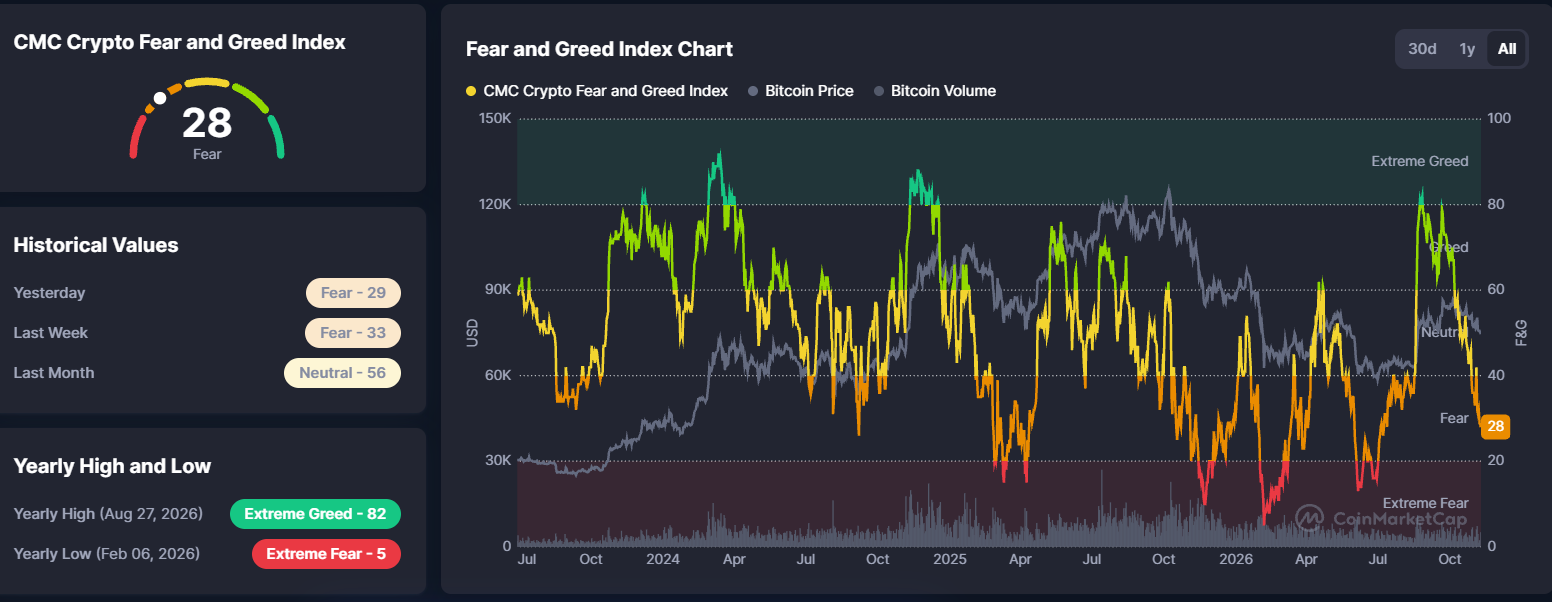
This index assesses multiple elements, including volatility, trading volume, social media engagement, Bitcoin dominance, and search trend activity. Recent days have shown a decline in the index, which was relatively higher just a week ago. One month prior, however, it remained close to the Greed territory. The persistently low measurements signify that caution is outpacing opportunistic buying among traders.
Factors Behind the Market Weakness
Several converging elements are contributing to the current bearish market conditions and heightened market anxiety:
- Technology Sector Pressures: Recent uncertainties involving NVIDIA, particularly regarding investigations into the company’s CEO and board, have adversely affected broader technology and AI deals. Cryptocurrencies have recently exhibited a tendency to move in tandem with high-beta tech stocks.
- Liquidation Cascade: A staggering $1 billion in leveraged positions were liquidated abruptly, predominantly comprising long positions. Reports suggest that Ethereum holdings represented a large portion of these liquidations.
- ETF Outflows: Significant weekly redemptions from US spot Bitcoin ETFs have added to the selling pressure, primarily led by institutional investors.
- Macroeconomic and Regulatory Concerns: Unease surrounding potential future legislation affecting cryptocurrency, especially following the midterm elections, and ongoing worries from previous incidents involving security breaches at major exchanges keep risk appetite low.
Navigating a Fear-Driven Market
The current market environment is characterized by typical traits of fear-driven trading. The forced liquidation of leveraged longs has resulted in negative ETF flows and subdued readings on the fear and greed index. Under these circumstances, price fluctuations often respond more to negative news than they do to positive developments, which struggle to gain traction.
Historically, prolonged periods within the fear zone can lead to a situation where forced selling diminishes, allowing stronger investors to absorb available supply. This could eventually pave the way for stabilization or a price rebound. However, there has yet to be a definitive shift signifying this change, leaving market observers keen to monitor whether Bitcoin can maintain critical technical levels around the mid-$74,000 mark and the 200-day moving average.
At this moment, the interplay between fear and greed, alongside a shrinking total market capitalization remaining nestled in the mid-to-high 20s range, reflects the cautious stance adopted by both retail and institutional market participants. Traders and investors are currently favoring capital preservation while they await clearer indications emerging from traditional markets, macroeconomic data, as well as resolution of recent geopolitical and corporate uncertainties.

bitcoinist’s editorial process focuses on providing thoroughly researched, accurate, and unbiased content. We adhere to strict sourcing standards, and each page is carefully reviewed by our team of top technology experts and experienced editors. This process ensures the integrity, relevance, and value of your content to your readers.
