


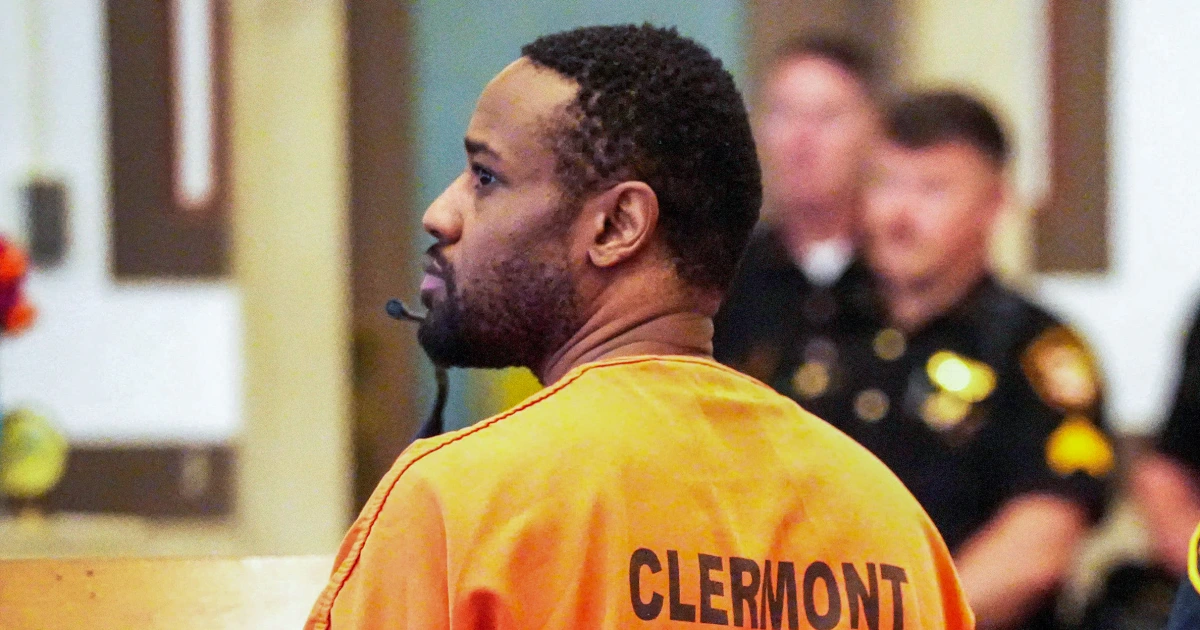
An Ohio man, Rodney L. Hinton, has been convicted of murder following a tragic incident that occurred shortly after he viewed body camera footage of Cincinnati police officers fatally shooting his 18-year-old son, Ryan Hinton. The jury, which had been deliberating since Wednesday, reached its verdict on Friday, as reported by NBC affiliate WLWT in Cincinnati. Hinton is scheduled to face sentencing on November 16.
Incident Overview
The events leading to the conviction unfolded on the evening of May 2025, after Hinton was called to the Cincinnati police station to watch the video of the fatal shooting of his son by a police officer. Ryan Hinton was present in a vehicle reported stolen, along with others, at an apartment complex. In the chaotic moments that followed, law enforcement pursued him, with police indicating that he was armed.
Details of the Shooting
According to police reports, when officers approached the vehicle, Ryan fled on foot. Body camera footage displayed one officer exiting his vehicle and aiming his gun at Ryan Hinton, who was captured running away from the scene. Witness accounts indicated that at least four shots were fired by the officer, and a firearm was later recovered from the area.
The Fatal Encounter with Law Enforcement
Not long after witnessing the distressing footage, Rodney Hinton was involved in a separate incident that led to the death of Special Deputy Larry Henderson. Prosecutors shared that Henderson barely managed to step out of the car’s path at the last moment but was tragically struck by Hinton’s vehicle. Evidence presented during the trial showed that Hinton aggressively accelerated to over 43 mph within seconds, with the accelerator reportedly pressed at 93.3%.
Trial Proceedings
In the court’s closing arguments, Assistant Prosecutor Kate Burroughs contended that Hinton purposefully directed his vehicle towards Henderson. “He turned his wheel the same direction that Larry moved, and the car struck Larry, throwing him, tossing him into the air,” she stated. The defense attorney, Clyde Bennett II, argued for a verdict of not guilty by reason of insanity, noting Hinton’s past struggles with mental health and the trauma of viewing the body camera footage. Expert testimony was provided on both sides regarding Hinton’s mental state; the defense claimed he was unable to discern right from wrong at the time, while state witnesses suggested he was simply grieving and angry but knew his actions were inappropriate.
Emotional Testimony from Henderson’s Family
During the trial, emotional testimony was heard from Henderson’s wife, who shared poignant details of their last interaction before he left for work. “He looked at me, and he said, ‘I love you,’ and I remember adding, I said back, ‘I love you too,’” she recalled, visibly moved.
Conclusion
Special Deputy Larry Henderson had only recently retired from the sheriff’s office before taking on the role of directing traffic near the University of Cincinnati during graduation ceremonies. This case serves as a profound reminder of the tragic consequences of violence and the complexities of mental health in moments of acute crisis.
