


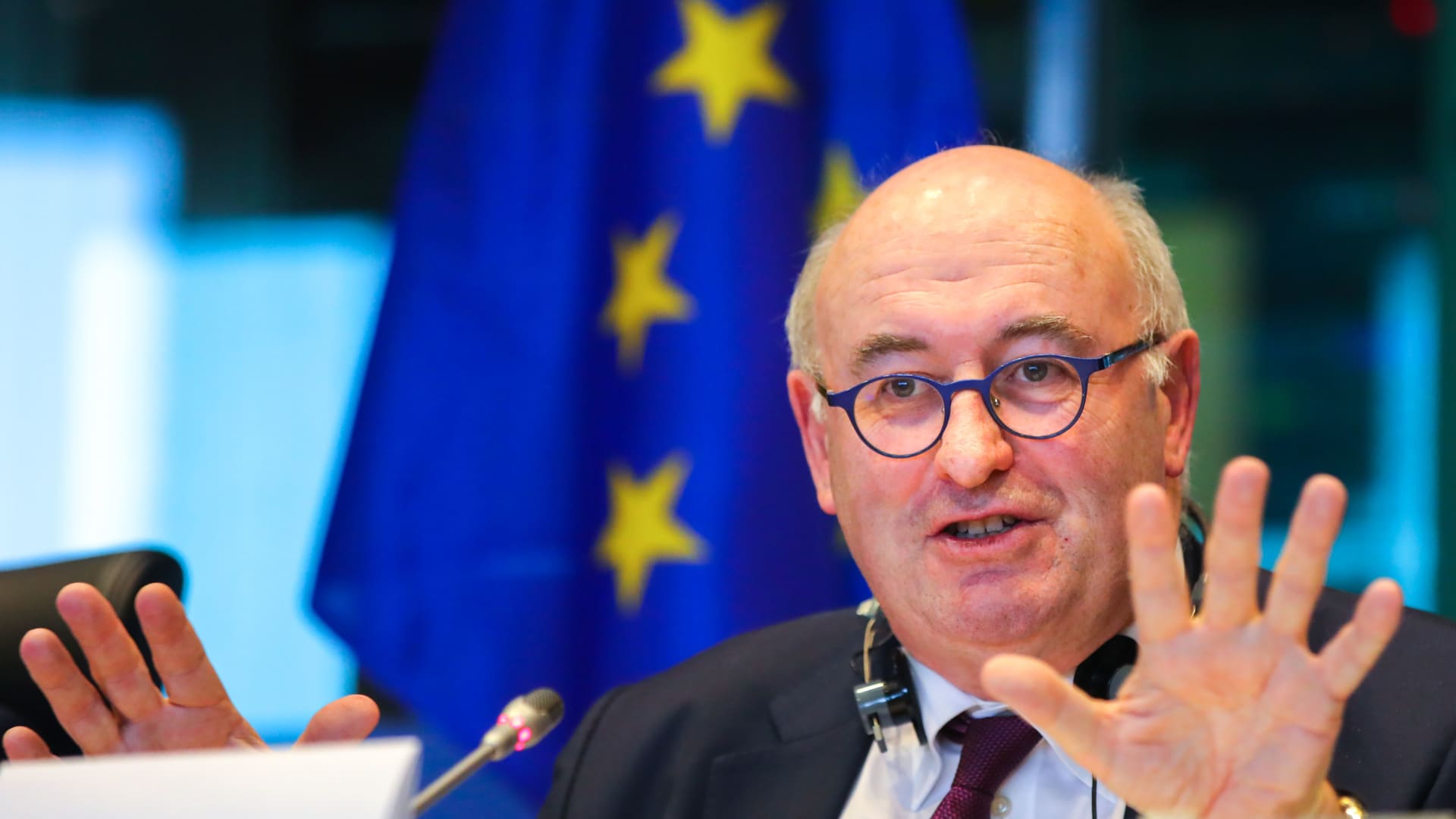
Phil Hogan, who previously served as the European Union’s trade commissioner, has underscored the urgent need for financial support for the UN Food and Agriculture Organization (FAO) as funding from the United States diminishes. During a recent interview in Singapore, Hogan emphasized that member countries must step up to address the financial gap created by the U.S. pulling back from its traditional roles in foreign aid and international agricultural support.
Hogan’s comments come amid significant budget cuts by the Trump administration, which has dismantled the U.S. Agency for International Development (USAID), once the leading global humanitarian donor. As Hogan seeks to become the next director-general of the FAO, he acknowledges the challenging landscape that lies ahead, particularly as funding shortages are reported across various UN agencies and humanitarian organizations. Chris Barrett, an agricultural economist at Cornell University, also raised concerns that reduced funding hampers the ability to monitor and respond to emerging food crises, potentially exacerbating hunger and unrest.
Addressing Global Food Security Challenges
Currently, over 266 million individuals are experiencing acute hunger, while a quarter of the world’s population faces varying degrees of food insecurity, according to the World Health Organization and the UN World Food Programme. With pressing issues such as the ongoing war in Ukraine affecting wheat exports through the Black Sea and geopolitical tensions in the Middle East disrupting fertilizer and energy supplies, the FAO is sounding alarms for what could be a catastrophic situation for global food security in the coming years.
Hogan pointed out that these geopolitical tensions, combined with the anticipated impacts of an El Niño weather phenomenon, are creating a precarious situation that could lead to significant food shortages globally by 2027. The interruption of essential commodity flows has heightened the vulnerability of poorer nations reliant on imports, posing threats to their food security and stabilizing economic conditions.
“We’re going into this on our way to being blind and with one hand tied behind our back, in terms of global capacity to foresee and respond to major food crises,” said Chris Newton, a food security analyst at the International Crisis Group.
Strategic Reforms for the FAO
Hogan, currently the frontrunner for the FAO leadership, has expressed that any reform initiatives must adapt to the reality of reduced budgets. His initial focus would be on relocating staff into regions facing acute hunger, thus ensuring a hands-on approach in crisis areas. Collaborating with other UN agencies to maximize resources and efficiency will also be a priority, he indicated, as the organization aims to meet its objectives of providing consistent access to nutritious food and combating malnutrition.
Additionally, Hogan criticized the FAO’s insufficient involvement in the Black Sea Grain Initiative, an accord that was key to resuming food and fertilizer exports from Ukraine, emphasizing the need for the FAO to play a more proactive role in addressing food security challenges within the UN framework.
Challenges Ahead
The convergence of climate change, geopolitical conflicts, and economic factors such as rising interest rates and reduced donor contributions are complicating the global response to food crises. Chris Newton warns that the international community is ill-prepared to handle impending food shortages effectively. Nonetheless, some experts, like Ian Mitchell from the Center for Global Development, suggest that while El Niño presents risks, global grain stocks are healthy enough to mitigate an immediate food crisis, and market indicators do not currently predict a supply crunch.
As the FAO approaches a critical juncture, Hogan’s potential leadership could influence how the organization tackles these multifaceted challenges and ensures food security for millions at risk across the globe.
