


La Guaira, Venezuela — A month has passed since an earthquake struck Venezuela, killing thousands, but conditions in La Guaira still feel like a distant memory.
Subscribe to read this story without ads
Get unlimited access to ad-free articles and exclusive content.

Walking down a residential street is like walking through a graveyard of buildings you no longer recognize, even if you’ve lived there for years.
And there is another reality affecting the state. It’s a refugee. Hundreds of people are now homeless and living in donated tents.
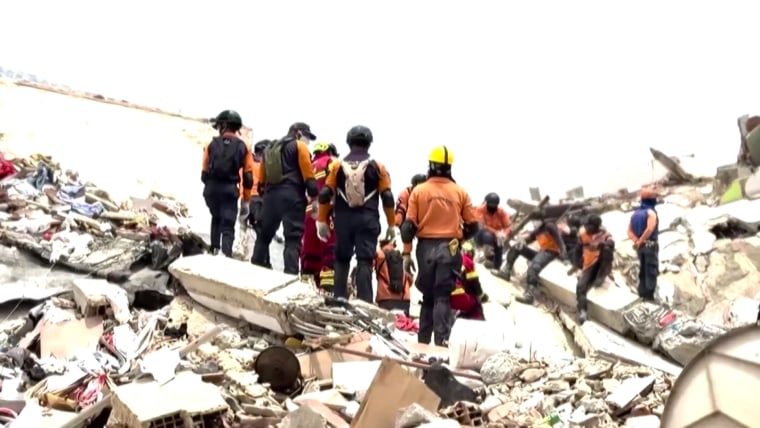
Some still hope the government will help them regain what they lost. Some people just want someone to tell them their house will be habitable again.
This is the case with the Brisas de Maiquetia residential development, located directly opposite the international airport in Caracas.
This is an apartment complex built under the Great Housing Mission, a national program created in 2011 by the late President Hugo Chávez to provide social housing to low-income people and disaster victims.
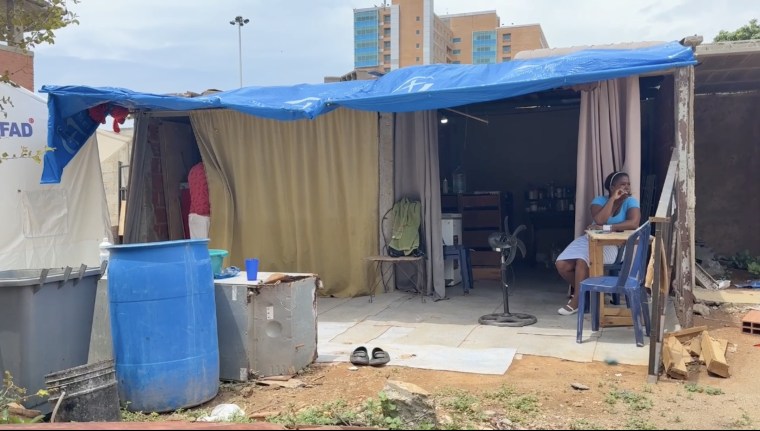
Once inside, you’ll find white and blue tarps spread beneath what was once a habitable building.
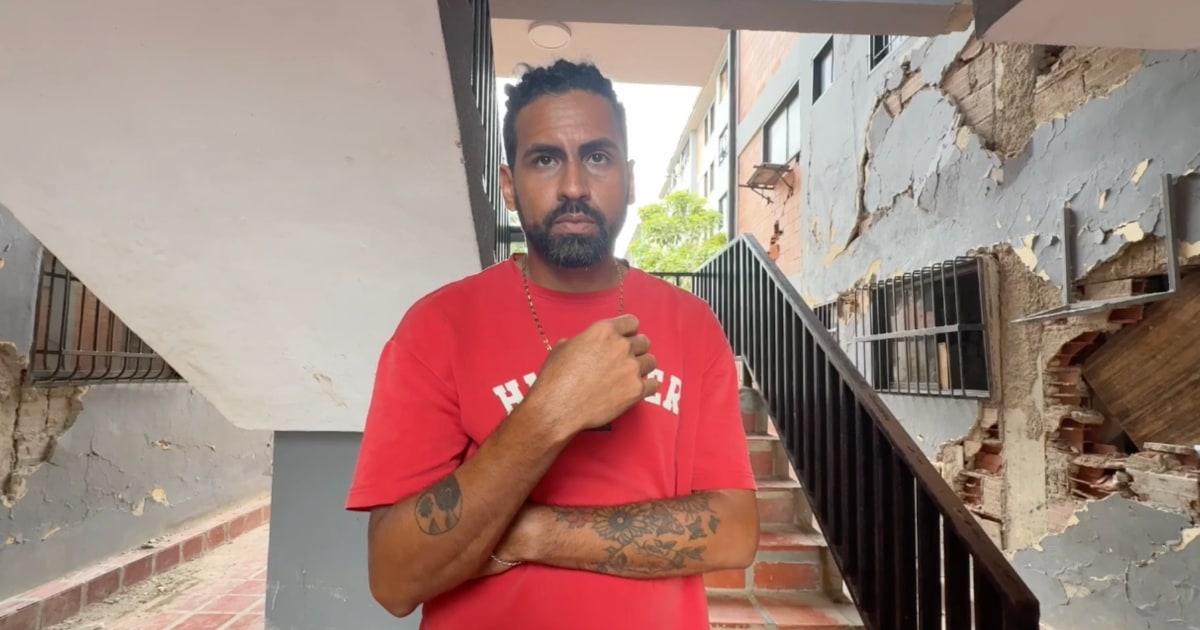
Ray Cazorla, a local resident who has lived there for about 16 years, says the situation is worsening day by day and the aid that has arrived is very scarce.
Cazorla told Noticias Telemundo that “international aid transits are not allowed to pass through here or are not actually arriving (…) I saw publications that said that trucks with boxes of international aid were not arriving here, but that was a lie.”
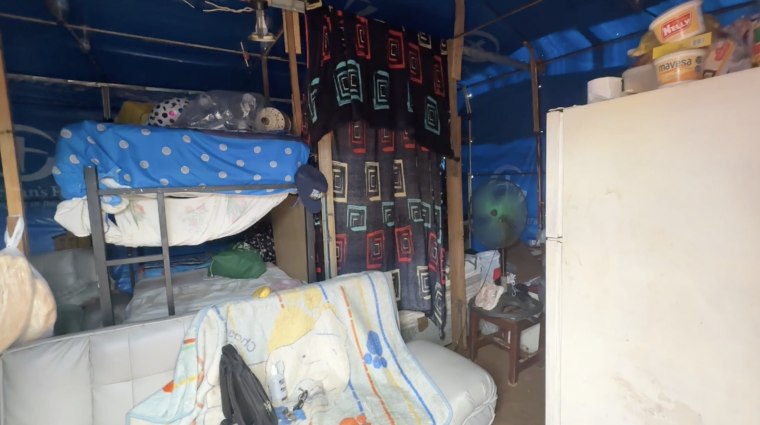
The problem gets worse once inside the tent. Heat, humidity, and steam make it impossible to stay indoors. “We are barely surviving like this. We are only surviving because of the fans we had to connect to the poles with the wiring we installed ourselves,” Cazorla added.
Previously, residents had been sleeping in tents outside the housing complex, but when Interim Governor Delcy Rodriguez visited the area to inspect relief efforts on July 15, they were told they had to return to the housing complex and live in donated tents.
There are only bunk beds in the room that can accommodate the whole family. Everything else, such as the refrigerator, stove, gas cylinder, and even a portable air conditioner, had to be taken out of the apartment by the family.
Cazorla explained that after the earthquake, he was unable to remove anything from his house because the stairs were severely cracked and he feared that if he moved heavy appliances, the stairs would completely collapse.
He said engineers who inspected the building said there were no structural problems, only problems with the masonry and brickwork. he doesn’t believe them.
“One of the towers has a broken main beam,” Cazorla said. “I don’t know if they will repair it or not, but all apartments are like that.”
According to residents, there is no drinking water in the area. Therefore, drinking water tanks with filters are installed at various locations throughout the development. They were set up not by the government, but by the Kadena Foundation, the humanitarian organization of the world’s Jewish community.
However, this filtration system has flaws. The process is done drop by drop, so it can take a full day to fill a 5 liter pot.
The remaining tanks, many of which were salvaged from the ruins themselves, are filled with water pumped from the road. Residents claim that the water is yellow and unfit for drinking. Use only for bathing and cooking.
“We feel more and more alone every day. The first day when the government arrived with a huge crowd, there was a real uproar because we thought the government would speed up the process,” Cazorla said.
He said that in the days that followed, no government officials came and his neighbors were left alone, tending to their homes and waiting in tents for the nightmare to pass.
Venezuela’s interim government assured them they would be able to return to their apartments by March 2027. The news was not well received, but some people have already resigned themselves to the idea that the tent will be their home for months on end. “We will be staying here for several months. We are all living on the floor because no one wants to leave the apartment for fear of valuables being stolen,” one person pointed out.
Some people decorate the entrance to their tents with potted plants, flowers, and family memorabilia. Some people put cement underneath so that the soil doesn’t bother them as much.
Brisas de Maiquetia is not free from looting, a problem that affects all of La Guaira. Messages such as “Already looted” and “Neighbors, be careful, no more looting” are painted on the walls of some buildings. Residents said they managed to get the situation under control despite a police presence in the area and National Guard patrols.
10 showers for 600 households
More than 3,000 people live in the area and must use public toilets provided by the state, many of which are poorly maintained. There are 10 public showers that have become unusable over time due to misuse by some residents.
A young couple who lived in the building said they had to repair the showers themselves and were focused on keeping them usable.
“We don’t have water now because the kids come in unsupervised and use up all the tanks. By the time we go to take a bath, there’s no water left,” said one of the children.
Cazorla pointed out other everyday problems and dangers.
“There are a lot of mosquitoes and flies. We are prone to cholera and dengue outbreaks,” he said. “Water from rain is stagnant, and virus infections could occur at any time.”
Another neighbor, Nora Romero, said some people ran into their apartments to take showers, risking further collapse. Since living in tents is not practical, residents are trying to make a living from the ruins, but they are constantly worried about what will happen if the buildings are destroyed by aftershocks.
“The situation is very delicate because there are children. They haven’t even cleared the rubble. We are receiving some assistance, but what we need most is water for the children, because diarrhea, influenza and coughs are already a problem,” Romero said.
“We are vulnerable. The stairs have already lost their foundation and are susceptible to collapse in aftershocks,” Cazorla said.
rebuild what is broken
Carlos, who does not want to give his last name, lives on the first floor of the tower. Although his apartment no longer has a kitchen or bathroom, he and his two children are still trying to build a life for themselves among the ruins.
“I had just renovated my apartment. I changed the kitchen, I changed the floors. Now I’ve lost all of that,” he said. The renovations cost about $2,000, and he knows he won’t get that money back.
Andrea Debar, who lives on the second floor of a building near the entrance to the housing development, said only the first and first floors of the most damaged apartments will be repaired, while the upper floors, which suffered some infrastructure damage, will remain unaddressed.
“The authorities came to take pictures and then left. They built two walls, but both collapsed. These apartments are uninhabitable. The cracks in the walls are increasing every day,” said Dever, who lives in a tent with his partner Leonexis Sekeda and their daughter.
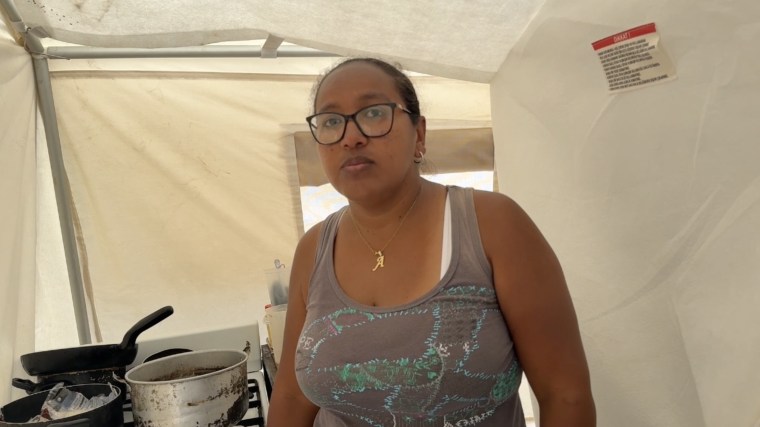
Aid is lacking. The water in the tank tastes like chlorine, so they choose to buy water or wait until the donated water runs out before drinking water from the tank.
Andrea said she never had to worry about food after the earthquake when she lived outside an apartment complex across the street from the airport.
Things changed when Delcy Rodriguez visited the area on July 15th and moved into an apartment complex. “They haven’t brought us any food since we came here. They give us government bags, but other than that we procure everything ourselves.”
Deburu worked at the airport, which has not yet resumed operations, and is afraid to return. “If we don’t have jobs, what are we going to do? We’re not going to use the government, but the government should help us.”
“I want to leave here because it’s so depressing, but the question is where are we going to go? The whole state has been affected. Businesses, supermarkets, pharmacies, banks, nothing is left,” Dever said.
Residents say José Alejandro Teran, the governor of La Guaira state, has only visited the area twice, but support has not been felt. The governor’s office did not respond to a request for comment.
Deburu and Sekeda are worried about returning to school and work. “I don’t know what condition the high school will be in. I thought about going back to work, but I’m disappointed because all the buildings are destroyed. If we go there and they don’t repair it properly, there will be another tragedy.”
Residents of Brisas de Maiquetia say they only ask for one thing: help. They are calling on governments to respond to the basic needs of local communities, and they are calling on the international community not to turn a blind eye.
Besides rubble and collapsed buildings, the earthquake left behind people who we hope will never be forgotten.
An earlier version of this article first appeared on Noticias Telemundo.
