


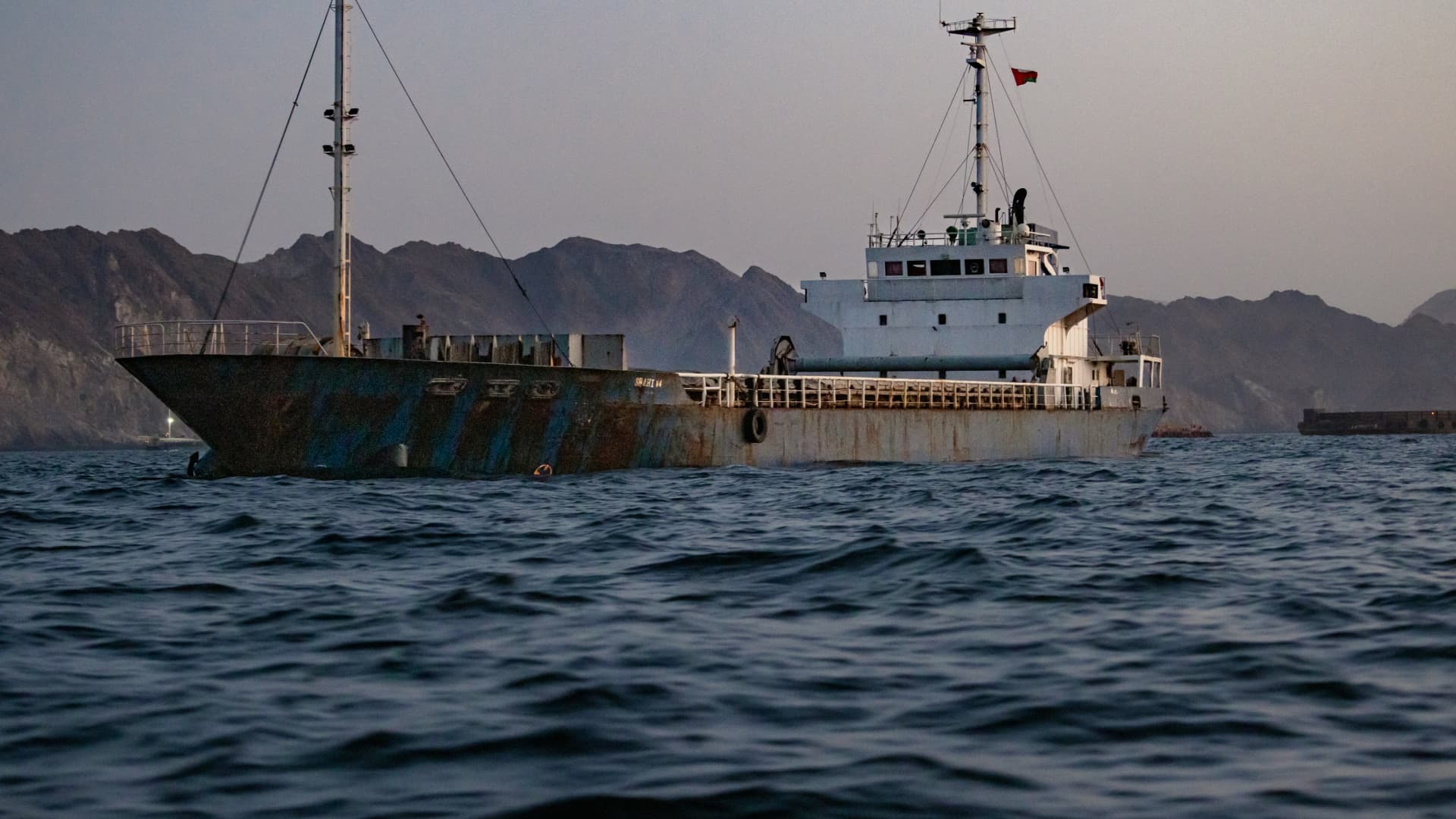
An oil tanker and cargo ship remain anchored off the coast of Port Sultan Qaboos in Muscat, Oman, on June 21, 2026.
Elke Scoliers | Getty Images
Iran’s Islamic Revolutionary Guard Corps on Wednesday warned shipowners that establishing new routes through the Strait of Hormuz without coordination with the Iranian government is “unacceptable and dangerous” and threatened action against vessels that ignore its instructions.
This stark warning underscores the Iranian government’s determination to maintain control of the Strait of Hormuz and resist passage that circumvents its permission. It also highlights the continued uncertainty faced by shipowners navigating the strait, even after the United States and Iran signed a memorandum of understanding last week to reopen the strategically vital energy artery.
According to local Iranian media, the Revolutionary Guards Navy said only Iranian-designated shipping routes were allowed to pass, and coordination with the Iranian military through designated communication channels was mandatory.
According to the report, the Revolutionary Guards Navy said that “navigation outside these routes is extremely dangerous and prohibited and all vessels are cautioned to strictly avoid traveling outside the designated corridors.”
The warning came after a major naval intelligence group suggested an alternative route on Saturday, asking shipowners to consider transiting the strait along a southern route with their transponder signals turned on. “The southern transit route along Oman’s (territorial waters) has been confirmed to be mine-free and is the recommended route,” the notice said.
Traffic data showed a tentative recovery. According to ship tracking data provider Marine Traffic, the number of vessels passing through the strait last weekend tripled to 93 compared to the same period last year, but is still well below pre-war levels, when more than 100 vessels passed through the strait each day.
Marine Traffic also confirmed there were 31 confirmed crossings by commercial vessels and energy-laden vessels on Tuesday, as shipowners continued to utilize a combination of route patterns that saw Iran, Oman and the International Maritime Organization pass through the chokepoint. “Operators are still acting cautiously rather than returning to completely normal traffic patterns,” the company said Thursday.
In May, the U.S. Treasury sanctioned Iran’s Persian Gulf Straits Authority for attempting to “grab global maritime trade.” Treasury Secretary Scott Bessent also warned that the US government would not tolerate any toll system on Hormuz, and said the Treasury would actively target those involved.
Analysts have warned that any control by Iran could have a long-term impact on oil flows through the strait, as shipping volumes may not fully recover to pre-war levels if Iran maintains strategic control of the waterway.
Helima Croft, head of global commodity strategy at RBC Capital Markets, said the oil tanker traffic that passed through Hormuz before the war could be the pinnacle of transit for the foreseeable future. “Once the conflict ends and Iran is able to exercise operational control and influence over the strait, in our view, flows through the waterway will be significantly reduced,” Croft told clients in a note Thursday.
—CNBC’s Spencer Kimball contributed to this report.
