


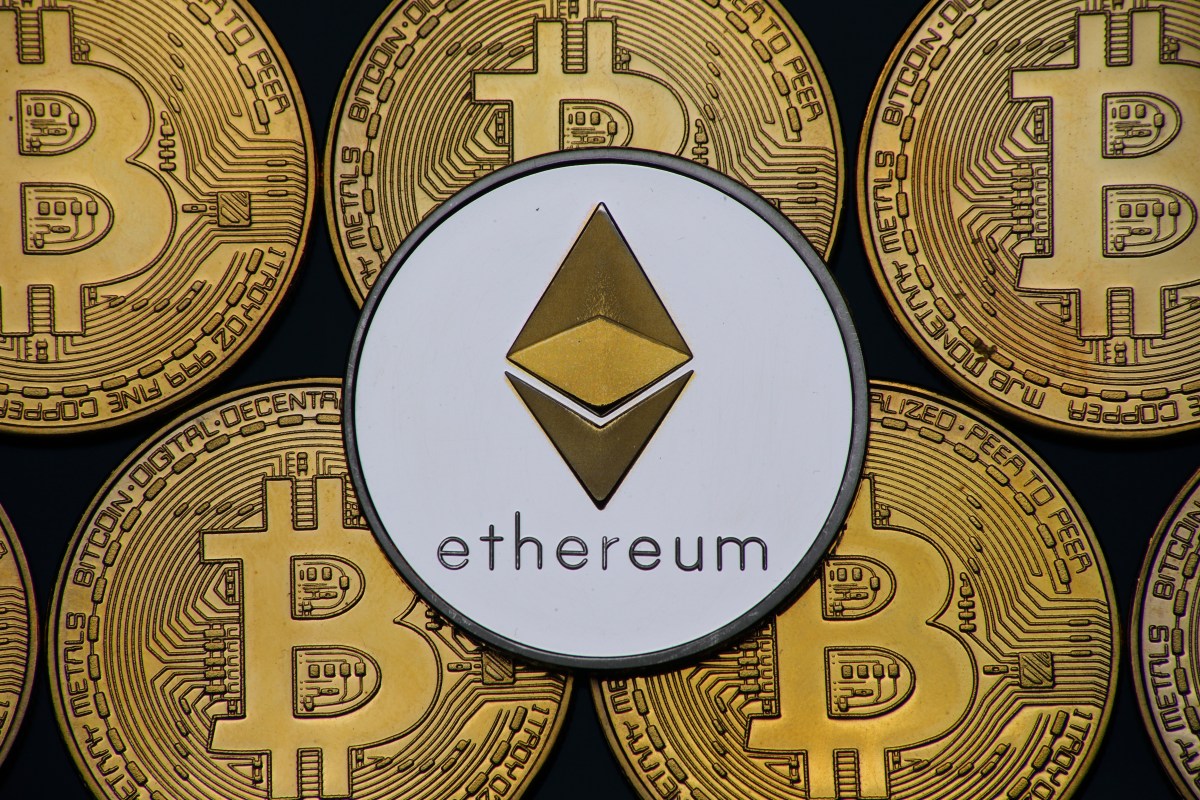
Wall Street appears to be going all in on cryptocurrencies, with publicly traded companies pouring trillions of dollars into digital tokens. And it’s not just Bitcoin. Publicly traded companies and hedge funds are increasingly interested in Ethereum, Solana, and other lesser-known digital assets (collectively referred to as “altcoins”).
Publicly traded companies hold more than $100 billion in Ethereum and $10 billion in other digital currencies, and are rapidly increasing their purchases as they diversify their portfolios into tokens that offer greater upside potential, new yield generation opportunities, and additional utility beyond being a store of value.
With over 37 million unique cryptocurrency tokens in existence, deciphering which tokens are worth investing in is a difficult challenge, but smart asset managers and investors looking to ride the trend prioritize tokens with strong fundamentals, high yield potential, and clear utility.
Institutional investors seek strong fundamentals and yield potential
First and foremost, institutional investors need tokens with strong fundamentals. They want enough liquidity to buy and sell large positions without moving the market, and they value smart tokenomics that prevents runaway inflation while tying asset values directly to actual network usage. Regulatory clarity and established custody processes are equally important, giving your finance, audit and compliance teams the confidence to operate smoothly.
Institutional investors then value blockchain’s staying power: its active developer base, mature governance, enterprise-grade security, and incentives to keep developers and infrastructure providers committed for the long term.
Next they look at income. How can you generate the best returns from your stock holdings? Rather than relying on passive price appreciation, many switch to assets with attractive short-term staking rewards. Solana emerged as an early favorite because it combines deep markets with simple staking, allowing treasury teams to earn yield while maintaining exposure to high-throughput networks. Recent moves by companies such as BitGo, BIT Mining, and Upexi reflect broader competition for SOL accumulation and stakes.
Smart fund managers seek ecosystems with clear product-market fit
For many institutional investors, the calculation ends here. A crypto asset strategy is a financial tool, a way to balance leverage, optimize tax and debt positions, and tactically adjust entry and exit times. From that perspective, tokens function like any other asset: they are liquid, tradable, and ripe for arbitrage.
But others see it differently. For them, investing in cryptocurrencies is less like trading dollars against euros and more like investing in the Internet in 1995. These asset managers see cryptocurrencies as the underlying infrastructure for new types of applications. They are not leveraging cryptocurrencies purely for financial arbitrage, but are also making long-term bets on which protocols will become the base layer for everything from payments and AI to data marketplaces and on-chain finance.
For example, an asset manager evaluating Avalanche (AVAX) might consider how its modular “appchain” architecture has made it popular with institutions and major brands like Visa, FIFA, and Konomi because it allows custom appchains (mini-blockchains) to be fine-tuned to suit their needs.
When considering investing in TON, they might dig into the network’s tight integration with Telegram, a distribution channel of 1 billion users, and how that could lead to widespread success for the network’s “mini-chat app.”
This metric (let’s call it “likelihood of widespread adoption”) does not show up clearly in tokenomics or other hard data, and requires deep industry experience to find it. As the market matures, the evaluation of tokenomics, liquidity, and other simple metrics will become automated and commoditized. What sets companies apart is their ability to recognize this potential before it becomes apparent.
The chains asset managers choose today will determine the next decade.
As institutional money becomes more dominant in these markets, the characteristics that define a “good” token will increasingly be filtered by the priorities of corporate treasurers and asset managers. This means liquidity screening, yield modeling, and product-market fit analysis will form the protocol’s roadmap, as well as other whitepapers.
The choices asset managers make today to allocate capital will have a huge impact on which ecosystems succeed in the long term. Projects with billions of dollars in funding from Wall Street are poised for success, while others may struggle to remain relevant.
For fund managers, this is an enormous responsibility. They now hold the reins leading the development of cryptocurrencies, and must ensure that the rush to monetize the technology does not reduce it to worthlessness and wipe out their holdings.
For builders, this is both an opportunity and a warning. Protocols that can speak the language of institutional capital without losing sight of the inherent benefits of cryptocurrencies will claim huge stakes. Those who are unable to do so may find that being technically superior but strategically misaligned is just another way to be left behind in a multi-trillion dollar market.
Budd White is Chief Strategy Officer at Avalanche Treasury Company, a strategic digital asset treasury (DAT) focused on the Avalanche ecosystem.
