


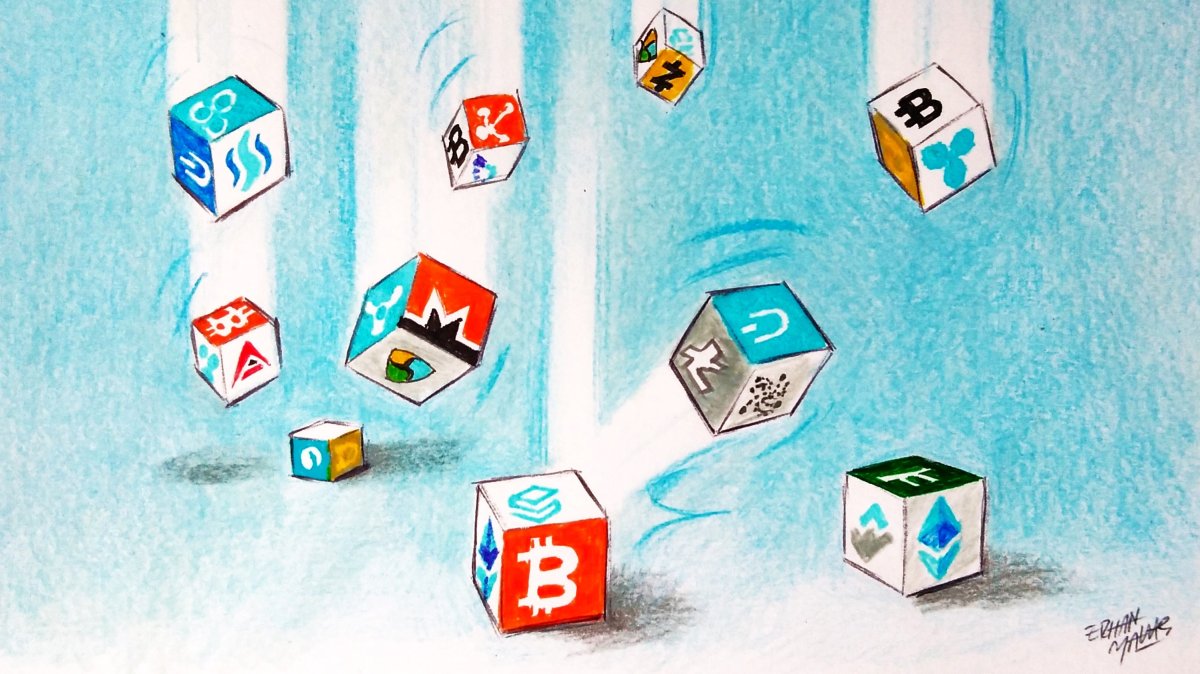
Looking at the cyclical history of the crypto market, it is clear that every major bull market has been underpinned by a compelling narrative that attracts mass capital and investor interest. The first story was the emergence of Bitcoin as digital gold. This was followed by a wave of ICOs in 2017, allowing anyone to issue their own tokens.
By 2020, decentralized finance (DeFi), which promises to cut out traditional financial intermediaries and generate profits through yield farming, took center stage in the bull cycle. In 2021, the market focus shifted to non-fungible tokens (NFTs) built on cultural excitement, and profile picture NFTs (PFPs) became expressions of digital art, online identity, and community belonging. The $69 million sale of Beeple and the rise of collections such as the Bored Ape Yacht Club signaled that NFTs have reached the peak of economic excitement as a phenomenon. Subsequently, Web3, and more recently Metaverse, touted as the future of artificial intelligence, continued to attract investment thanks to its potential for blockchain integration, data analysis, and automation.
However, the past story, particularly DeFi 1.0 and NFTs, remained limited by existing capital within the ecosystem and failed to attract large-scale inflows from traditional financial markets. This situation has led the market to grapple with the perception of a “zero-sum game.” Furthermore, high transaction fees and scalability issues hinder mass adoption. Indeed, the lack of narrative, combined with the pressures of global macroeconomic conditions, has significantly slowed retail investor participation.
The number of first-time investors entering the crypto market has slowed significantly compared to the rapid adoption rate seen during the pandemic-era savings boom of 2020-2021. From the beginning of 2024 to 2025, the rate of active bank account users transferring funds to crypto accounts increased by just 2%. I believe that the lack of a new mainstream narrative with tangible benefits and the predominant role of tight monetary policy in encouraging capital outflows from risk assets played an important role in this economic slowdown.
Despite the retail silence, I observe that the market’s investor base is maturing. Investors today tend to increase the proportion of digital assets in their portfolios by 5% to 20%, adopting long-term strategies such as “buy-and-hold.” The market is evolving towards a more strategic crowd looking for projects with solid foundations. Most importantly, we are also at a critical macroeconomic turning point associated with this maturation process.
The US Federal Reserve (FRB) has decided to end the quantitative tightening (QT) process, an important element of monetary tightening, on December 1, 2025. Although Fed Chairman Jerome Powell said there was “no certainty” that a rate cut would be made in December, an end to aggressive liquidity tightening could signal a structural easing of global liquidity conditions and indicate an increased risk appetite among institutional and large investors. The end of QT could pave the way for a new narrative focused on institutions. However, I believe that for cryptoassets to become a permanent part of global finance, they need to offer more than just technical promise. We must provide a real bridge to traditional financial markets.
Migration to blockchain
The institutional legitimacy and multi-trillion dollar scale that crypto markets seek can be achieved through the tokenization of real-world assets (RWA). Traditional financial asset classes such as real estate, government bonds, and commodities can be converted into digital tokens that are fractional, liquid, and transparent on the blockchain.
This aspect is of interest to large financial institutions as it provides tangible efficiency gains, such as reducing operational costs and eliminating payment risks. For example, investment bank Standard Chartered predicts that the tokenized RWA market will total $2 trillion by 2028. This represents more than 57x growth compared to the current market size of $35 billion. RWA tokenization targets mainstream financial products and clearly shows the potential to bring Trif’s trillions of dollars of capital onto the chain.
In fact, institutions turning to RWA tokenization are an operational necessity. By the end of 2024, global wealth is expected to be around $1.7 quintillion, according to data from the McKinsey Global Institute. In contrast, Finadium data shows that the amount of assets actually used as collateral in the financial system is only $29.6 trillion. Even taking into account that not all of the world’s asset stock qualifies as collateral, this figure indicates a serious lack of mobilization and structural inefficiency in collateral markets. RWA tokenization has the potential to unlock collateral mobility by digitizing these assets and making them easier to circulate. This could lead to structural changes in global trade settlement processes, risk management, and interbank liquidity flows.
Stablecoin liquidity and DeFi provide the fundamental prerequisites for this rapid expansion of RWA. The stablecoin market has exceeded $300 billion, creating the liquidity foundation necessary for a “self-sustaining DeFi growth cycle.” This liquidity base also facilitates increased participation by institutional investors. Indeed, institutions have begun building secure storage and automated compliance monitoring infrastructure in a process accelerated by regulatory clarity steps such as MiCA. All these developments indicate that RWA tokenization serves as a structural bridge that allows cryptofinance to pass trustworthiness tests.
Tokenization of RWA can strengthen the legitimacy of cryptocurrencies, thereby addressing the sector’s most fundamental criticism that cryptocurrencies are speculative with no intrinsic value. RWA tokenization allows converting cryptocurrencies into financial instruments suitable for traditional portfolio management by providing tokens directly linked to tangible and verifiable assets (bonds, real estate). This new narrative, which offers trillions of dollars worth of market potential, will increase financial inclusion by increasing system efficiency and providing individual investors with incremental access to asset classes with high barriers to entry.
Ultimately, RWA tokenization may be the new narrative the cryptocurrency market needs. This story is supported by both the lifting of macro liquidity constraints and the multi-trillion dollar infrastructure established by large financial institutions. The next bull market appears poised to form around tangible economic benefits, secure integration, and efficient payments.
The tokenization of RWA could be the starting point for transforming cryptocurrencies from a niche technology experiment to an integral part of global finance. This has the potential to lead both institutional and mature retail investors into a long and strong growth cycle. RWA tokenization could be the subject of the next breakthrough, but more importantly, it could enable the integration of blockchain technology into the global economy.
The views and opinions expressed in this article are solely those of the author. They do not necessarily reflect the editorial stance, values or positions of Daily Sabah. The newspaper provides space for diverse perspectives as part of our commitment to open, informed public debate.
