


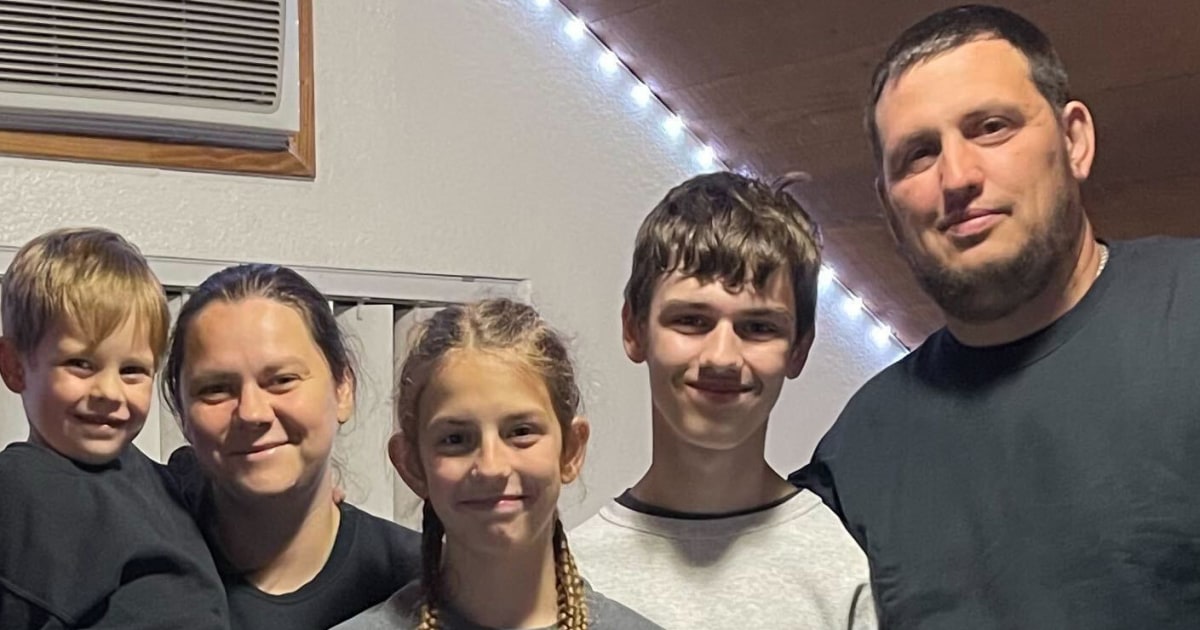
Oksana said she was looking forward to being able to turn off the lights at night, to cry alone with her family and begin to recover from the suffering she endured in detention.
The Dilley facility has attracted national attention in recent months as advocates warn of potential human rights abuses as the Trump administration expands detention of migrant families, sending hundreds of parents and children to vast, remote centers.
DHS has denied allegations of poor conditions, saying the facility is fully equipped to house the family and that the children are receiving adequate medical care, food and education. CoreCivic, which operates Dilly under a federal contract, said the health and safety of detainees is its top priority.
Under decades of federal court settlements governing the detention of immigrant children, minors are generally not supposed to be held for more than 20 days. But lawyers representing families say many continue to be held for weeks or even months beyond that limit.
DHS previously defended the detention of a Russian family while their asylum case was pending, slamming a legal settlement that set a 20-day limit as “a left-wing tool that violates the law and wastes precious U.S. taxpayer funds.”
Nikita and Oksana’s lawyer, Elora Mukherjee, a professor at Columbia University Law School and director of the Columbia University Immigrant Rights Clinic, said her clients’ months of confinement and sudden release reflected a broader pattern she described as minors being held far beyond the 20-day threshold and released only after sustained legal pressure and media scrutiny.
Mukherjee said the administration’s goal appears to be “to make detention conditions so dire and intolerable that children and adults alike are discouraged from immigration proceedings.”
“My clients from New Jersey to Texas have given up on valid immigration and visa applications because they cannot tolerate being detained any longer,” she said.
For Nikita and Oksana, giving up was never an option. They said it was dangerous for Nikita to return to Russia because of his outspoken opposition to President Vladimir Putin’s government.
Conditions of his release were not immediately clear, Mukherjee said. He said they will be staying with sponsoring families in California and will likely be required to attend regular check-ins with Immigration and Customs Enforcement as the case progresses. It’s an oversight process that successive administrations have routinely used since before DHS began detaining large numbers of parents and children last year.
The family’s path to detention began more than a year ago when they fled Russia for Mexico. After a year of trying to determine the best path to safety, they crossed the U.S. border and applied for asylum, hoping the United States would provide them with refuge.
Instead, they were transferred to Dilley.
In an interview with NBC News last week, the family said their children had become lethargic, their days a blur with little to do and few familiar comforts. Meals were repetitive, greasy and sometimes inedible, and schooling was non-existent.
Camila suffered from recurrent ear infections, which her parents said were made worse by shoddy medical care and having to wait outside in the freezing cold and rain for hours after each medication, resulting in partial hearing loss and lingering pain. In an earlier statement, DHS defended the girl’s treatment, saying Dilley’s children were receiving “comprehensive medical care.”
On Monday, their 135th day in federal custody, they felt goosebumps and hesitation when immigration officials told them they would soon be released. Other family members were told they would be leaving “tomorrow” and only had a few weeks left.
Oksana said they told each other, “Let’s be happy when we get out.”
Once word got out that their release was pending, other detainees couldn’t wait to celebrate, the couple said. The cafeteria became noisy as parents and children clapped and shouted. Camila said the roar was so loud that she felt pain shooting through her injured right ear.
Some families approached with tears in their eyes. Others said they were praying for them.
Detention was a harsh introduction to a country where Nikita and Oksana hoped to provide safety for their children.
But they haven’t lost hope.
They recalled conversations with detainees who had lived in the United States for years before being arrested and taken to Dilley with their families. The man told Nikita not to judge America by what he experienced at the facility.
“This is not America,” the man told him. “Once you get over the fence, your mind changes quickly. People around you want to help.”
Nikita said she didn’t believe him at first, but after Mukherjee and others came forward in recent weeks, her view began to change.
“Somehow you have restored faith in our people,” Nikita said in a video call.
