


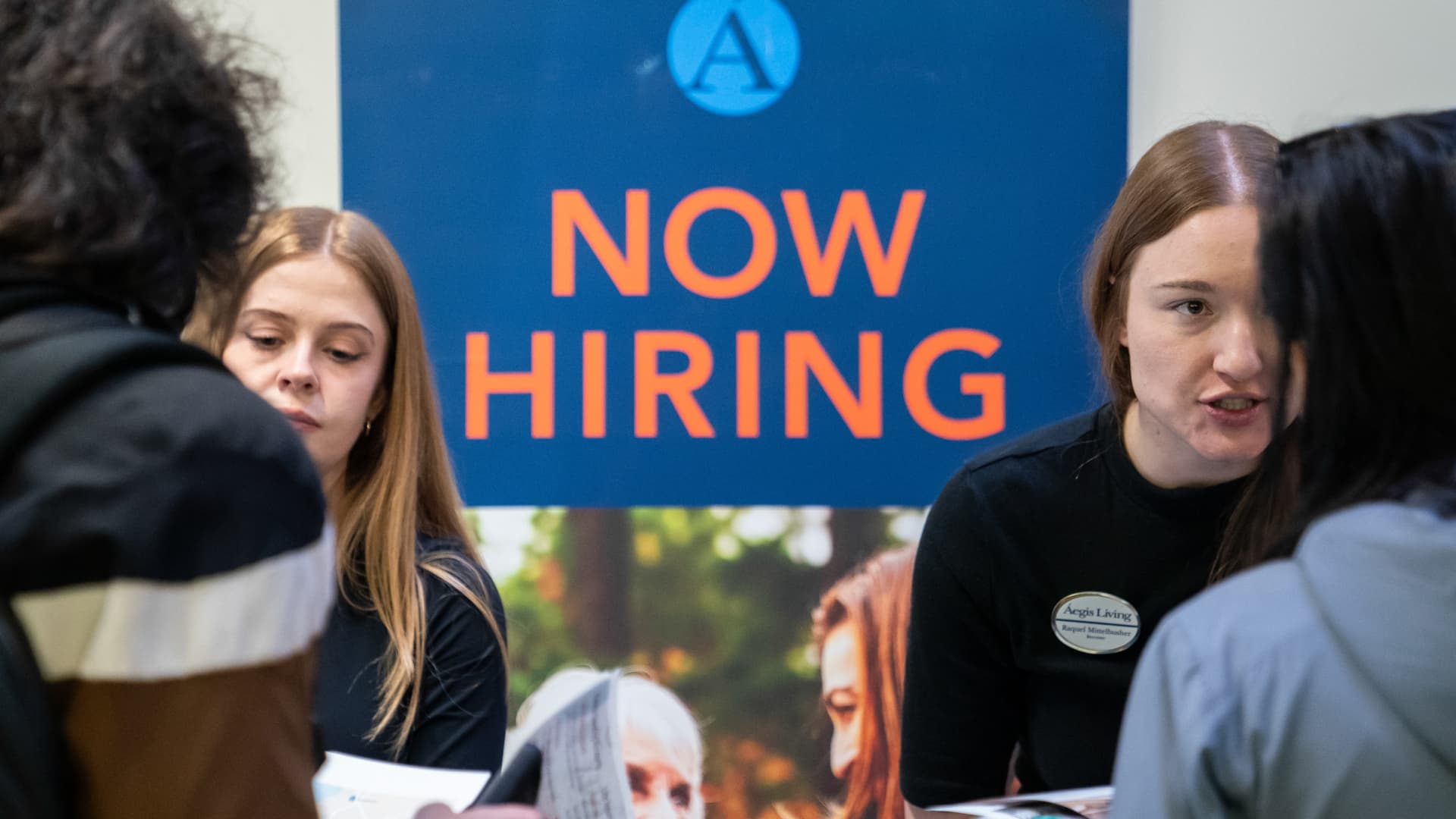
Job growth was stronger than expected in early 2026, easing some concerns about the state of the U.S. labor market.
Nonfarm payrolls rose by 130,000 in January, beating the Dow Jones consensus estimate of 55,000, according to seasonally adjusted numbers released Wednesday by the U.S. Bureau of Labor Statistics. The total also improved from December, when it increased by 48,000 cases, after being revised slightly downward.
The unemployment rate fell slightly to 4.3%, lower than the 4.4% expected to remain unchanged from last month. The more inclusive measure, which includes disengaged workers and those in part-time jobs for economic reasons, fell to 8%, down 0.4 percentage points from December.
Markets rallied on the news, with stock market futures rising. Government bond yields also recorded a significant rise.
The report, delayed for nearly a week due to the partial government shutdown that ended on February 3, is consistent with a labor market in slow growth mode, albeit with only scattered signs of increased layoffs. Following a year in which job creation averaged just 15,000 per month, January was the highest employment growth since December 2024.
President Donald Trump touted the numbers as a sign of a strong economy and again called on the Federal Reserve to lower interest rates.
“Great job openings, far more than I expected!” President Trump posted on Truth Social. “The United States should pay much less on its debt (bonds!). We are once again the strongest country in the world and therefore should pay the lowest interest rates ever.”
In addition to the monthly numbers, BLS released the final revision of the benchmark for the period April 2024 to March 2025. These numbers have been revised downward by a total of 898,000 seasonally adjusted initial numbers. This was slightly lower than the 911,000 expected last September, but was about what Wall Street expected.
As is typical in the U.S. labor market, the healthcare sector led the job growth in December, adding 82,000 jobs. Social assistance also increased, by 42,000 people, as these two categories accounted for almost all of the net job creation. Although there was almost no increase in the construction industry in the previous year, there was an increase of 33,000 jobs.
Several categories posted losses.
According to the BLS, federal employment fell by 34,000 people last year as some people who were laid off but granted deferrals by the Department of Government Efficiency were removed from the payroll. Financial activities decreased by 22,000 people.
“January was a huge jump in hiring,” said Heather Long, chief economist at Navy Federal Credit Union. “January’s surprisingly strong job growth was driven primarily by health care and social assistance. But it was enough to stabilize the job market and bring the unemployment rate down slightly. The job market is still largely frozen, but it is stabilizing. This is an encouraging sign for the start of the year, especially after the 2025 employment recession.”
Regarding wages, the average hourly wage increased by 0.4% from the previous month, which was 0.1 percentage points higher than expected, and for the year, it increased by 3.7%, which was in line with expectations.
Wall Street’s expectations for the report dampened after a series of other announcements showing slowing private sector growth, increased layoff plans and fewer job openings. Even White House officials, including National Economic Council Director Kevin Hassett, were tempering expectations.
“After years of presenting a lukewarm outlook for the economy based on a weak labor market, this article provides solid data points on the dimensions of solid economic growth, an improving labor market, and wage growth that can support consumer spending,” said Brad Smith, portfolio manager at Janus Henderson Investors.
Last year, the number of employees rose consistently and slowly, following several months of negative growth. Monthly negative revisions continued into 2025, even after President Donald Trump fired former BLS Director Erica McEnterfer in early August after criticizing the large downward revisions to total employment. A downward revision was also made in November, and the final figure was 41,000, down 15,000 from the prior estimate.
Amid a weak labor market, the White House’s crackdown on illegal immigration has dampened labor demand, while the overall climate of uncertainty around tariffs and inflation has also prompted companies to plan for workforce growth.
But December’s numbers give reason for optimism.
While the Establishment Survey showed that employment was higher than expected, the Household Survey was even better. The survey, used to calculate the unemployment rate, showed the labor force participation rate rose slightly to 62.5%, adding 528,000 people to the workforce for the month.
These statistics indicate that the US Federal Reserve is likely to keep interest rates unchanged.
Futures traders increasingly expect the Fed to hold the line at its March meeting, but still expect a rate cut in June, according to CME Group’s FedWatch Gauge.
