


The body of an Israeli hostage remains in Gaza and implementation of a major plank of President Donald Trump’s 20-point ceasefire plan for the enclave is nearing, but there are major obstacles to the planned second phase.
Despite facing renewed pressure to move to a second stage, questions remain about whether negotiators will be able to overcome these significant obstacles. The second phase is aimed at preventing a return to the high levels of violence seen before the ceasefire.
President Trump said last week that the second phase would begin “soon,” without giving a more specific date. Axios reported Thursday that the White House hopes to announce a second phase before Christmas, unveiling the enclave’s new governance structure, citing two U.S. officials and Western sources directly involved in the process.
The second phase of President Trump’s plan calls for establishing a new governing structure in Gaza, disarming Hamas, and creating an International Stabilization Force, known as the ISF, to take over responsibility from the Israel Defense Forces, which currently occupy parts of the Gaza Strip.
Qatari Prime Minister Sheikh Mohammed bin Abdulrahman Al Thani, who has played a key role in a series of international negotiations, said on Saturday that discussions were at a “critical” moment. He told a panel discussion at the Doha Forum meeting in Qatar that the mediators were working together to advance the next steps in the ceasefire.
He said: “The ceasefire will not be complete until Israeli forces are completely withdrawn, which is not the case today, until stability returns to Gaza and people can move in and out.”
Egyptian Foreign Minister Badr Abdellatti told the conference that international stabilization forces were needed “on the ground as soon as possible,” while Norwegian Foreign Minister Espen Bart Eide said measures needed to be taken this month and warned that the current ceasefire “cannot be maintained for many more weeks at this stage.”
While the international community hopes for progress, the trajectory of the ceasefire thus far highlights both its fragile achievements and its enduring vulnerabilities.
Since the ceasefire took effect on October 10, the remains of 20 living hostages and 27 others have been returned to Israel. The body of Ran Gviri, 24, the last hostage killed in the Hamas attack on October 7, 2023, has not yet been recovered despite weeks of search efforts. Israeli authorities have steadily released Palestinian prisoners of war and detainees, both living and dead, as part of the exchanges.
Israel has repeatedly insisted that all hostages must be returned before a phase two deal can be reached, with Prime Minister Benjamin Netanyahu this week stressing the need for “intensive and immediate efforts” to complete the deal.
Israel agreed to halt attacks on the Gaza Strip during the ceasefire, but flare-ups and violence continue, with Israeli airstrikes killing more than 350 people since the start of the ceasefire, taking the death toll in the enclave to more than 70,000, according to Palestinian Health Ministry statistics.
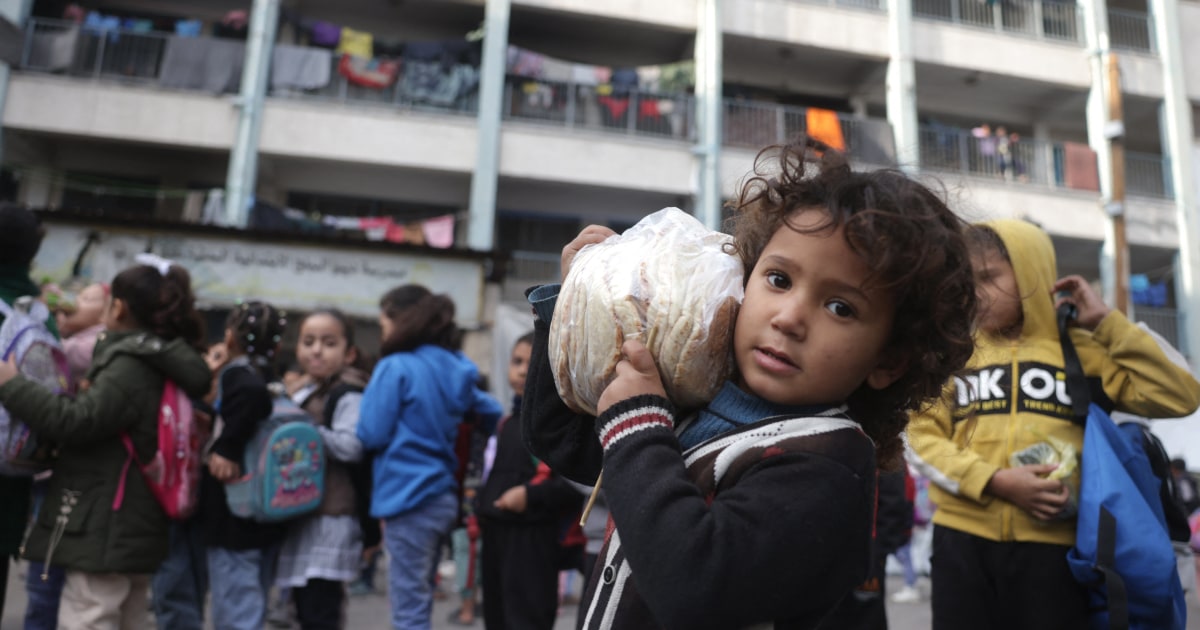
The first phase included promises to increase aid flows to Gaza, but UN experts say the number of trucks allowed into the country has never reached the agreed target of 600 per day.
Israel said the Rafah crossing in the southern Gaza Strip would soon reopen to allow Palestinians to enter Egypt, but crossings in both directions would not resume until Ghuviri’s body was returned, another promise under the deal.
And as Phase 1 staggers along, analysts warn that Phase 2 presents a number of complex challenges, from security arrangements to competing governance demands, that could slow or stall the process.
Dr HA Hellyer, a senior associate research fellow at the Royal United Services Institute, a defense and security think tank in London, said negotiators were “trying to square a circle that simply cannot be squared”.
He questioned whether the International Stabilization Force could truly dismantle Hamas, a goal Israel had failed to achieve in two years of “brutal” military operations. President Trump’s peace plan stipulates that Hamas disarm, but the group has reasserted control of Gaza during the first phase of the ceasefire and has shown no immediate signs of disarming.
He told NBC News that disarming Hamas through military intervention “is not of interest to any other group.”
And when it comes to governing Gaza, Hellyer added, “Trump could create a peace commission,” referring to the group that would sit at the top of Gaza’s governing structure under Trump’s plan, but added, “You can’t just force this on the ground without the cooperation of the population, unless you just want to turn it into a new type of occupation.”
Turkish Foreign Minister Hakan Fidan said Saturday that negotiations over the Gaza Stabilization Force, including its mandate and rules of engagement, are continuing, and that its main objective should be to separate Israelis and Palestinians along the border.
“Thousands of details and questions remain,” Fidan said. “I think once we deploy the ISF, the rest will come.”
But Fawaz Gerges, a professor of international relations at the London School of Economics, echoed Hellyer’s concerns, noting that so far “no country has agreed to support its troops in Gaza and potentially ultimately confront Hamas.”
Gerges also worried that “what is envisaged for the second phase will never actually be implemented,” adding that calling what is happening in Gaza a ceasefire is “an illusion” because “Palestinians, especially civilians, continue to be killed every day.”
“Although the humanitarian situation for the Palestinians has improved somewhat, it remains a catastrophic situation,” he said.
