


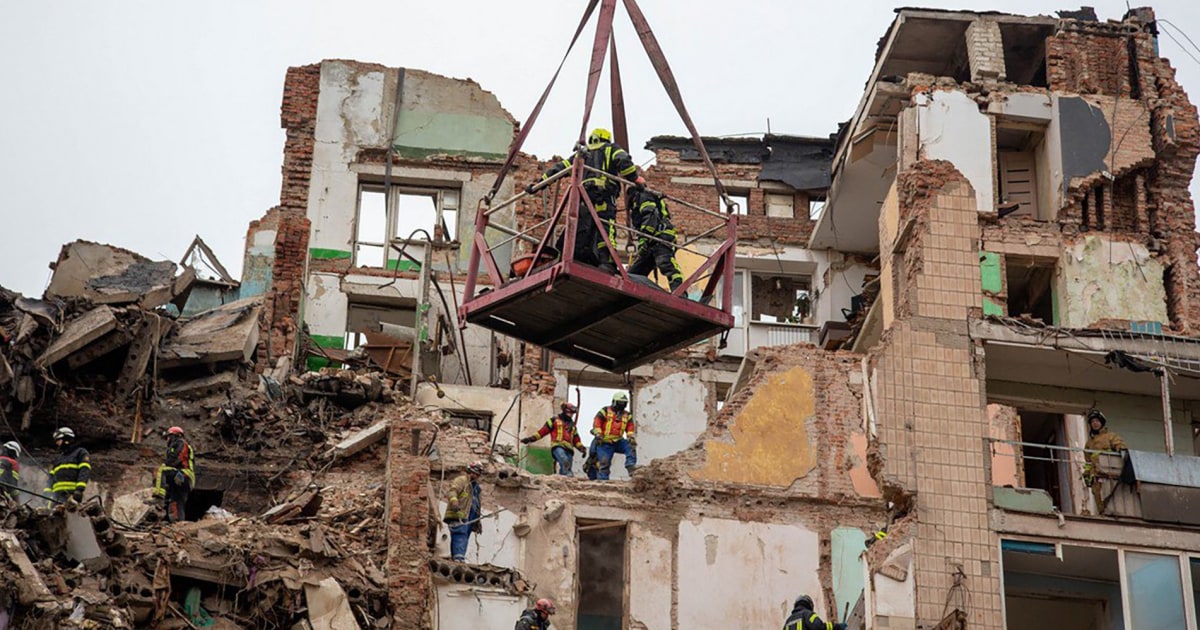
A U.S.-led peace plan that reflects several key demands from Russia has sent ripples across Europe, with leaders raising concerns that it could leave Ukraine vulnerable and calling for changes to the proposal.
European leaders and key allies, meeting on the sidelines of the Group of 20 summit in South Africa, said in a joint statement that the plan required additional work, adding: “We are concerned that proposed restrictions on the Ukrainian military will leave Ukraine vulnerable to future attacks.”
The statement was signed by the leaders of the United Kingdom, France, Germany, Italy, Finland, Ireland, the Netherlands, Spain and Norway, as well as the European Commission and the Council of the European Union. The leaders of Japan and Canada also signed the statement, warning that “borders must not be changed by force.”
President Donald Trump has set a Thanksgiving deadline for Ukraine to agree to a 28-point framework, which would give Russia more territory than it owns, impose limits on the Ukrainian military and potentially prevent Kiev from joining NATO, a long-standing demand of the Kremlin.
U.S. officials say the U.S. proposal includes security measures modeled on NATO Article 5, which would require the U.S. and its European allies to treat any future attack on Ukraine as an attack on the entire transatlantic community, but there are few specifics about what that would mean.
Rustem Umerov, secretary of Ukraine’s National Security and Defense Council, told the Telegram on Saturday that senior Ukrainian and U.S. officials will meet in Switzerland to discuss “possible elements for future peace.” Separately, Ukrainian President Volodymyr Zelensky’s office announced on Saturday that the delegation’s participation in talks “to be held in the coming days” had been confirmed.
The White House described the plan as “a best-case win-win scenario in which both sides get more than they deserve,” and said the proposal was developed with input from Russia and Ukraine.
But analysts say the plan could lead to a dangerous capitulation for Ukraine, which has so far rejected plans that would have called for recognizing Russia’s illegal annexation of the entire East Donetsk region and Crimea.
“Even if some of this plan is forced down Ukraine’s throat, it will be the end of Ukraine as we know it. This is a real capitulation,” Michael Bozyurkiw, a nonresident senior fellow at the Atlantic Council’s Eurasia Center, who was in Johannesburg, told NBC News by phone.
Keir Giles, a senior consulting fellow at Chatham House, a London-based think tank, said the US was promoting “the potential for a disastrous surrender for Ukraine”.
“And now we will once again see a new panicked scramble by European leaders to avoid dire consequences for their national security,” he said, adding that “Europe’s response to repeated disastrous peace plans has been in words, not actions.”
“We shouldn’t say anything about Ukraine without Ukraine,” European Commission President Ursula von der Leyen said in a post on X on Friday, adding that European leaders would also meet in Angola next week.
Late Friday, Polish President Karol Nawrocki said on the X program that Ukraine must have a “decisive voice in the peace negotiations.” “The price of peace should never be the achievement of strategic objectives by the aggressor, and the aggressor was and is the Russian Federation,” he added.
As European leaders pondered the plan on the sidelines of the Group of 20 summit, President Trump, who is boycotting the meeting over baseless claims that the country’s white minority is being targeted by hate crimes and land grabs, was conspicuously absent.
President Trump initially said Vice President J.D. Vance would attend, but later said the U.S. delegation would not participate. Russian President Vladimir Putin, who has an arrest warrant issued by the International Criminal Court, will also not attend.
How much influence Europe can actually have on this plan without US involvement is an open question, and this issue has implications both for Ukraine’s borders and for peace on the continent as a whole.
“They can’t influence this,” Bozyurkikh said. “It will make NATO and Europe look weak and Putin will continue to cause further chaos,” he said.
“It’s like a high-speed train, with President Putin and President Trump on board, President Zelenskiy on the departure platform, and Europe stuck at the check-in counter,” he added.
Mr Giles said the military aspects of the peace plan would leave Ukraine virtually defenseless against a future Russian attack.
“And since Ukraine forms the first line of defense for Europe, this could have potentially dire consequences for the entire continent,” Giles said.
Ukrainian lawmakers were also not particularly happy with the plan, with Viktoria Podgorna from Ukrainian President Volodomyr Zelensky’s party saying it would give Russia “an amnesty for starting a brutal war.”
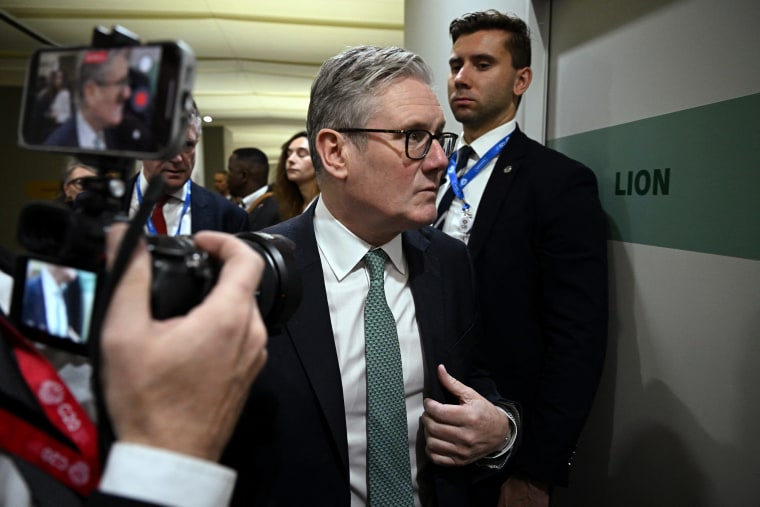
President Zelenskyy said on Friday he had met with British Prime Minister Keir Starmer and the prime ministers of Germany and France, adding that he would also consult with the US government to ensure that Kiev’s “principled position is taken into account.”
“Ukraine may now face a very difficult choice: between losing its dignity or risking the loss of an important partner, between a tough 28 points and a very difficult winter,” Zelensky said, warning the country of a “very difficult and eventful” week ahead.
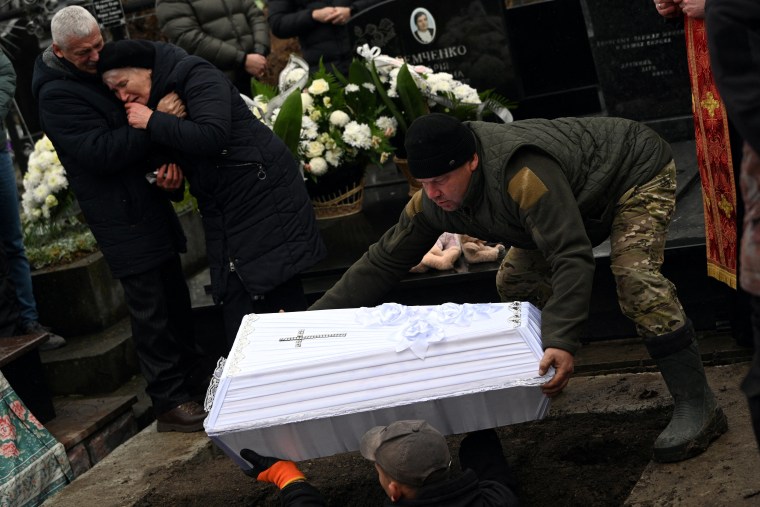
His warning came as Ukraine suffered setbacks on the battlefield and Zelenskiy trying to contain the fallout from a $100 million corruption scandal involving his top officials.
On Saturday, Russia’s Ministry of Defense announced that it had captured two more villages in eastern Ukraine, Donetsk and Zaporizhia.
Russia’s interests, both on the battlefield and in the proposed plan, have elicited a positive response from the Kremlin, with Putin saying it “could form the basis of a final peace settlement”, but adding that it had not been “substantively” discussed with Russia.
Meanwhile, in the southern Russian city of Syzran, two people were killed in an attack on a Ukrainian energy facility, regional governor Vyacheslav Fedorishchev announced Saturday on the Kremlin-backed Max Messenger app.
