


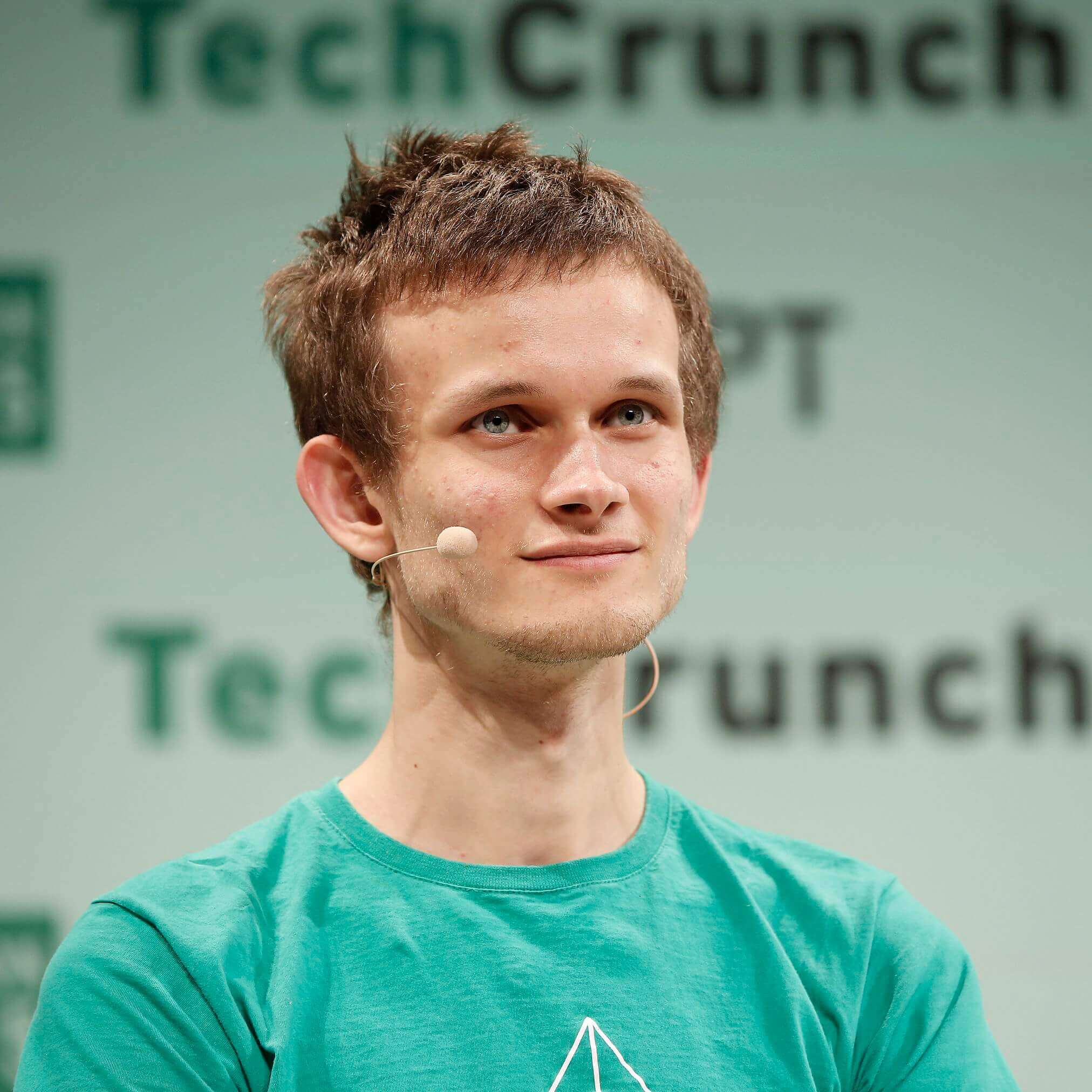
He praised Polygon and founder Nailwal’s contributions to Ethereum’s scalability. Buterin highlighted Polygon’s early leadership in zero-knowledge technology. Nailwal has been involved in various humanitarian efforts, including funding Balvi’s pandemic research.
The crypto market remains depressed as Bitcoin fundamentals continue to weaken.
Amid uncertainty, Vitalik Buterin publicly praised Polygon and its founder Sandeep Nailwal for their outstanding contributions to Ethereum expansion.
Mr. Buterin commented on Polygon’s technological advances, particularly its initial investment in zero-knowledge EVM (Ethereum Virtual Machine) development.
He further praised Neilwal’s humanitarian efforts that combine health initiatives with blockchain development.
We really appreciate both Sandeep Nailwal’s personal contribution and Polygon’s invaluable role in the Ethereum ecosystem.
We really appreciate both @sandeepnailwal’s personal contribution and @0xPolygon’s invaluable role in the Ethereum ecosystem.
In summary:
* Polygon hosts @Polymarket. This is perhaps the most successful example of a “not just boring finance” app that actually delivered results.
— vitalik.eth (@VitalikButerin) October 21, 2025
The impact of polygons on Ethereum growth
Buterin’s post highlights that Polygon is the basis of Ethereum’s scalability and acknowledges that the blockchain hosts innovative applications.
For example, Polymarket is gaining attention as a non-monetary blockchain that provides real-world value.
Additionally, Polygon hosts multiple high throughputs.
We are also prioritizing ZK-EVM development and research.
Vitalik praised the project’s early collaboration with the Jording Bayliba team, which helped the Ethereum ZK ecosystem flourish during the experimental phase.
Polygon, through the implementation of Jordi Baylina’s team and other efforts, committed significant resources early on to demonstrating ZK-EVM, making a significant contribution to moving the field forward.
The Ethereum co-founder also praised Polygon for creating AggLayer to help with proof aggregation.
Buterin believes these efforts reflect Polygon’s dedication to building innovative tools that strengthen the Ethereum ecosystem.
Nailwal’s humanitarian efforts
In addition to Polygon’s technical success, Buterin also highlighted Sandeep Nailwal’s humanitarian work and personal integrity.
For example, his CryptoRelief initiative donated crypto assets to support India’s biomedical infrastructure.
As a gesture of Nailwal’s sincerity, Polygon’s co-founder refunded the $190 million worth of SHIB tokens that Buterin had sent to the relief fund.
Buterin later used these funds to launch Balvi, a pandemic response project focused on improving indoor air safety and global health.
He voluntarily returned $190 million of the proceeds of the SHIB tokens I donated. This has enabled Balvi’s entire open-source airborne disease control biotechnology program, and perhaps hastened our understanding of key topics in pandemic control, such as indoor clean air, by years.
ZK technology and future developments
Mr. Buterin expressed his gratitude and reflected on the crossroads of Polygon’s current progress.
The POL ecosystem was a pioneer in ZK technology, but things have matured.
For example, ZK-centric teams such as Risc Zero, Brevis, and Succinct Labs are now working independently from the L2 network.
Buterin believes that such separation allows each team to perform to its fullest potential and increases professionalism.
Furthermore, Buterin urged Polygon to adopt “off-the-shelf ZK technology” to strengthen security within its proof-of-security chain, in line with Ethereum’s vision of L2 scalability.
In fact, ZK takes a user-friendly approach, with the cost of proof for each transaction being $0.0001.
Altcoins Ethereum and Polygon’s POL have underperformed today, losing up to 5% of their value over the past day as sales activity dominates the broader cryptocurrency environment.
