


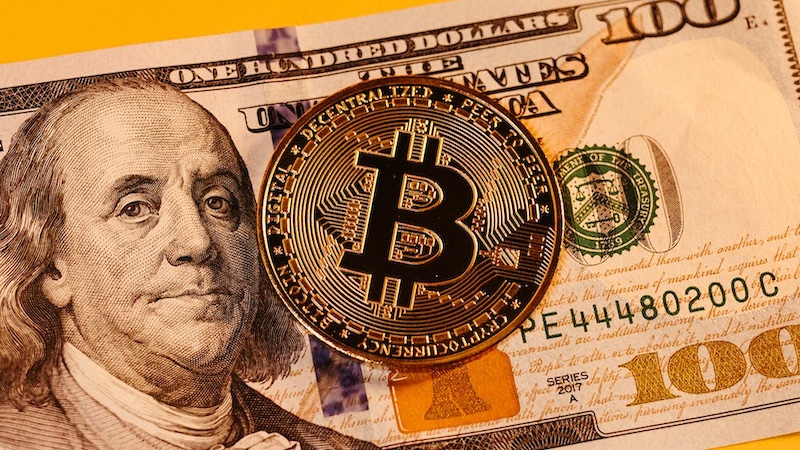
The future of money is coded, not printed, and our freedoms depend on whether the underlying protocols uphold sound money principles.
Money as a commodity is different from other things. It is not consumed and does not directly contribute to the production process. Individuals naturally try to acquire as much as possible, but paradoxically, from a society’s point of view, more is not always better. There is no such thing as an “optimal” money supply. Any quantity is sufficient as long as the price can be freely adjusted. Statisticians often confuse financial expansion with economic growth, but inflation only erodes the purchasing power of existing monetary units, enriching the first recipients at the expense of everyone else.
Milton Friedman, one of the principal architects of monetarism, rejected the gold standard on the grounds that producing commodity money (e.g., mining precious metals) was wasteful. Instead, he advocated a fiat currency with a predictable and transparent inflation rate in the 3-5% range.
However, monetarists fail to recognize that not only can free markets effectively regulate counterfeit goods, but also that privately issued money can serve as an important check on the expansionary impulses of the welfare war state. Murray Rothbard explains:
The reason is that currencies under the control of governments and their banking systems are subject to relentless pressure for continued monetary inflation. In contrast, the supply of gold cannot be manufactured at will by monetary authorities. It must be extracted from the ground by the same expensive processes that control the supply of other goods on the market.
The debate over the nature and supply of money goes beyond academic journals and central planning boards. In the case of cryptocurrencies, monetary policy is encoded within the protocol and defined by a fixed or inflationary supply and an emission schedule that governs the creation of new coins. These rules don’t just determine supply. It also establishes an incentive structure to support network security.
At the heart of its security is the protocol’s consensus mechanism, which ensures the accuracy and integrity of the distributed ledger. Proof-of-Work (PoW) coins require specialized participants, known as miners, to dedicate their computing power to solving complex mathematical hash puzzles. The first miner to solve the puzzle proposes a new block filled with transactions, which are then verified by other nodes in the network. After confirmation, the winning miner will be paid the block reward and transaction fee. Overall, the higher the hash rate, the more resistant the network is to attacks. A malicious attacker who controls more than 51% of the hash rate could halt transactions, reconfigure the blockchain, or perform double-spend attacks, which would have devastating effects on trust.
Monetary policy directly affects decentralization by determining the profitability of mining, which in turn affects both the short-term and long-term viability of the network. In the next section, we examine two PoW coins that exemplify contrasting approaches to monetary policy: Bitcoin (BTC), often described as “digital gold,” and Monero (XMR), a leader in the private digital cash space.
Bitcoin
When Satoshi Nakamoto created Bitcoin, the total supply was limited to 21 million BTC. According to this protocol, a new transaction block is added to the chain approximately every 10 minutes, and the responsible miner earns a reward. Initially, miners were given 50 BTC per block. Every 210,000 blocks (approximately 4 years), the block reward is cut in half. These halving events have historically caused astronomical spikes in the value of BTC. Since April 2024, the block reward has been 3.25 BTC. By 2140, the last Bitcoin will be mined. So what happens? How is the network protected?
As block rewards decrease over time, miners must increasingly rely on transaction fees. There is uncertainty as to whether these fees alone are sufficient to protect networks from 51% attacks. Large holders and Bitcoin companies could be incentivized to contribute their hashing power “altruistically.” However, entrusting the network to such miners undermines decentralization and increases the risk of censorship. Additionally, protocols that rely on transaction fees subvert miners’ game theory. To maximize rewards, miners may find it beneficial to delay publishing blocks or engage in undercutting strategies.
Increasing demand for non-monetary applications and decreasing block rewards are already reshaping network activity and miner incentives. Miners are making huge profits from rising fees due to Bitcoin’s burgeoning NFT community. In a controversial upgrade scheduled for October 30, 2025, software changes aimed at blockchain neutrality will remove data restrictions on arbitrary content that can be added to transactions. It remains to be seen whether non-monetary data will eventually clog the network, but in the long run, transaction fees will be needed to sustain the network after block rewards are exhausted. Uncertainty about the future purchasing power of money undermines its health and its ability to function as a reliable store of value.
Monero
The first block of Monero was mined in April 2014. In 2022, the protocol reached an initial supply cap of 18.4 million XMR, triggering a tail emission (perpetual block reward of 0.6 XMR). Approximately every two minutes, a new Monero block is mined using these tail emissions. The 0.6 XMR reward is set with an annual gold extraction rate in mind, which keeps annual tail emissions below 1% of the total XMR supply. The inflation rate due to these block rewards tends asymptotically to zero over time. Eleven years after the launch of Monero, the supply of XMR currently stands at 18.44 million units.
Although Monero’s monetary policy superficially resembles monetarist theory, its inflation is fundamentally different in both purpose and impact. The impact on purchasing power is negligible given the low compensation. More importantly, this modest issuance is a deliberate trade-off in favor of long-term safety and stability.
Additionally, tail emissions serve the practical function of offsetting lost coins. Private keys are lost over time and coins can be sent to baked-in addresses, reducing circulating supply. Monero’s privacy features prevent us from knowing how much XMR has been lost, but Bitcoin’s transparent ledger provides a reference point. Analysts estimate that between 2.3 million and 3.7 million BTC were lost, or 11-18% of the total supply.
Economic theory reminds us that there is no need to increase the money supply. As Ludwig von Mises explained in Human Action, “The amount of money available in the economy as a whole is always sufficient to ensure for everyone everything that money does and can do.” According to this view, the supply of XMR would be sufficient even without tail emissions. However, Monero’s monetary policy locks long-term security into predictable incentives. To withstand government pressure and thrive beyond 2140, it must remain a private medium of exchange with miners properly incentivized to protect the network.
Standing at a financial crossroads
With government debt reaching unprecedented levels and central bank digital currencies (CBDCs) threatening to plunge us into full-blown surveillance, the need for healthy money has never been more urgent. Our freedom depends on creating a parallel financial system supported by a censorship-proof medium of exchange that preserves purchasing power.
The long-term success of a cryptocurrency depends not only on its monetary policy, but also on its decentralization and network resilience. Regardless of which cryptocurrencies ultimately survive or how protocols evolve, healthy money is essential to a prosperous society because it alone can increase savings, resist the tyrannical impulses of the state, and protect freedom.
In the words of Saifeddine Amos of Bitcoin Standard:
Whether in Rome, Constantinople, Florence or Venice, history shows that sound monetary standards are a necessary prerequisite for human flourishing, without which societies stand on the precipice of barbarism and destruction.
When money fluctuates, civilization inevitably follows.
About the author: Michael S. Milano is the author of Lucid: A Novel. He received his Ph.D. from Ohio State University. His work has been published by the Mises Institute and the Libertarian Institute. All of his work can be found at MichaelSMilano.com. Source: This article was published on FEE
