


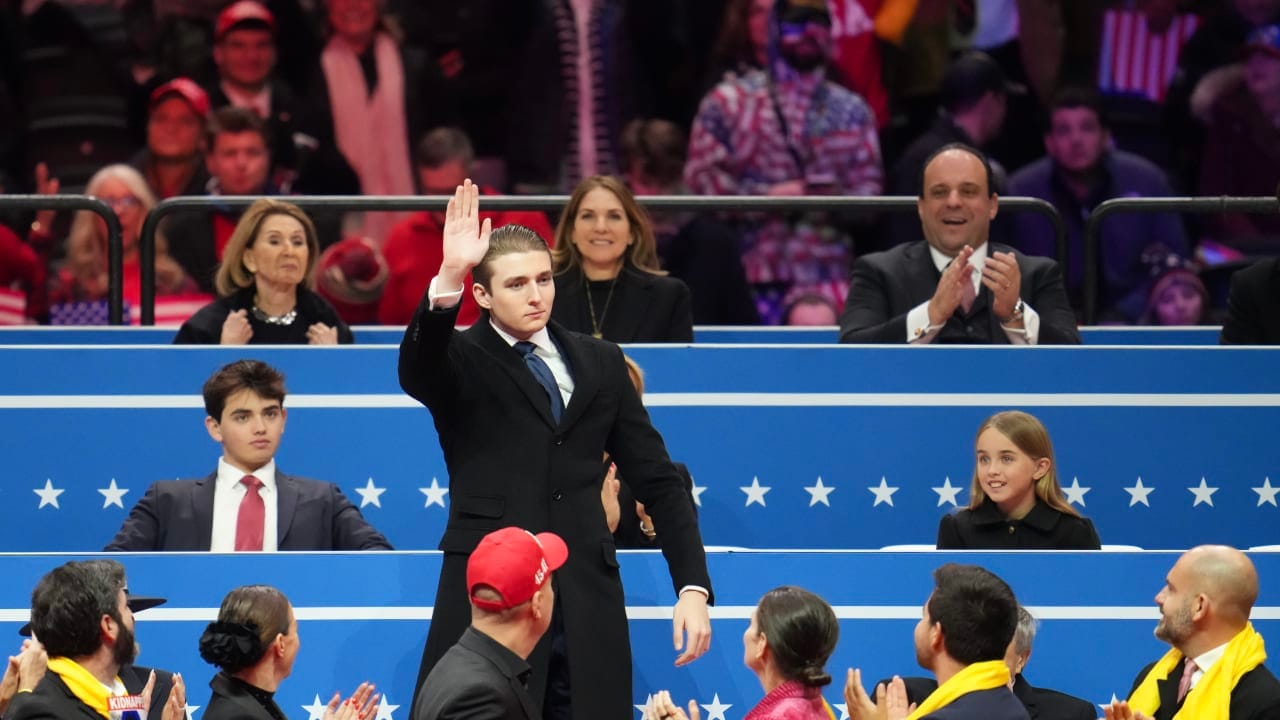
Barron Trump, 19, has been described as the brains behind his family’s cryptocurrency empire, which has raised hundreds of millions of dollars from Abu Dhabi. But behind the astronomical surge in wealth lies a dark world, with Miami billing itself as a hub for digital laundering, and “obfuscation” tricks that wipe out billions of people. “That kid is a genius”? I’m not sure.
Barron’s estimated net worth is $150 million, meaning he has “overtaken” his mother, Melania Trump. How did this happen? By carving out a profitable niche through early adoption of cryptocurrencies.
WLFI, tokens, and family play
Since launching his family crypto project, World Liberty Financial (WLFI), Baron’s valuation has skyrocketed. He is listed as a co-founder alongside his brothers, and the report credits him with identifying opportunities early on and inspiring his family to take action.
According to these reports, Baron has already earned about $80 million from the sale of “tokens.” On paper, his current holdings of 2.3 billion WLFI tokens could net him around $525 million if he chooses to sell them.
At a September launch, Donald Trump laughed about not knowing what a digital “wallet” was, while his son allegedly had “four wallets or something like that.” Barron reportedly spent the summer meeting with partners, reviewing technology projects, and finalizing strategies needed to expand the company. That child is a genius.
$3 billion annually
According to figures circulated in the business press, President Trump’s second term dramatically boosted the fortunes of children. Donald Trump Jr.’s wealth is said to have soared to $500 million in one year, and Eric Trump’s to $750 million. The president himself remains the biggest cryptocurrency winner, with $2 billion in crypto investments contributing to $3 billion in annual profits. The total amount has soared to $7.3 billion, and he has reportedly risen to number 201 on the Forbes 400. Of course, it’s all completely legal.
Cryptocurrencies facilitate laundering because their pseudo-anonymity and global scale are perfect for hiding the origin of dirty money. Criminals typically follow three steps. That is, placing “dirty” cryptocurrencies in a wallet or mixer. Hiding your tracks using layering, cross-chain bridges or “hops” between multiple wallets. Integrate, exchange or convert systems through P2P platforms.
According to the report, nearly $100 billion has been laundered through cryptocurrencies since 2019, reaching a peak of nearly $30 billion in 2022, much of it through licensed exchanges. Use cases range from drugs to ransomware, fraud and corruption. This 100 billion estimate is conservative to say the least.
And since “Donald Trump has previously been convicted on various corruption and fraud matters,” it’s worth asking where the real big bucks his son currently enjoys came from. Introducing Sheikh Tahnoun bin Zayed Al Nahyan of Abu Dhabi. He supported the $500 million deal for 49 percent of WLFI that Eric Trump signed just before Inauguration Day in 2025. According to these accounts, $187 million went directly to Trump family entities. Ayam Investment Co., Ltd., which has ties to Mr. Tahnoun, became the largest outside shareholder and installed executives on the board of directors. Separately, MGX announced that it will use WLFI’s stablecoin for a $2 billion investment in Binance.
Beachfront coin laundry in Miami
As anyone who follows cryptocurrencies and the sons of corrupt leaders already knows, Miami is one of the cities where crypto use is very popular, both in retail and institutional markets. The city bills itself as the “crypto capital,” and its mayor has publicly supported cryptocurrencies, even receiving a portion of his salary in Bitcoin.
Blockchain companies and major exchanges set up offices, startups and fintech companies flocked to the area, and the city of Miami rolled out its urban token, MiamiCoin, to funnel revenue into municipal services. The real estate market recorded direct crypto transactions, including a $14 million purchase paid in USDT, part of an estimated $4.2 billion in crypto real estate purchases in 2025.
More than just “crypto capital,” Miami is also a major laundering center in the United States, primarily through real estate, drugs, and now cryptocurrencies. The report says more suspicious activity has been recorded at New York banks than in New York or Los Angeles since the days of the cocaine cowboys of the 1980s. Latin American criminal groups are using shell companies and luxury real estate to launder money, and some high-profile crypto cases have occurred, from a local resident laundering $230 million in stolen crypto to the seizure of $10 million tied to a Sinaloa Cartel crypto wallet. You don’t need to understand cryptocurrencies to understand the potential for crypto laundering.
