


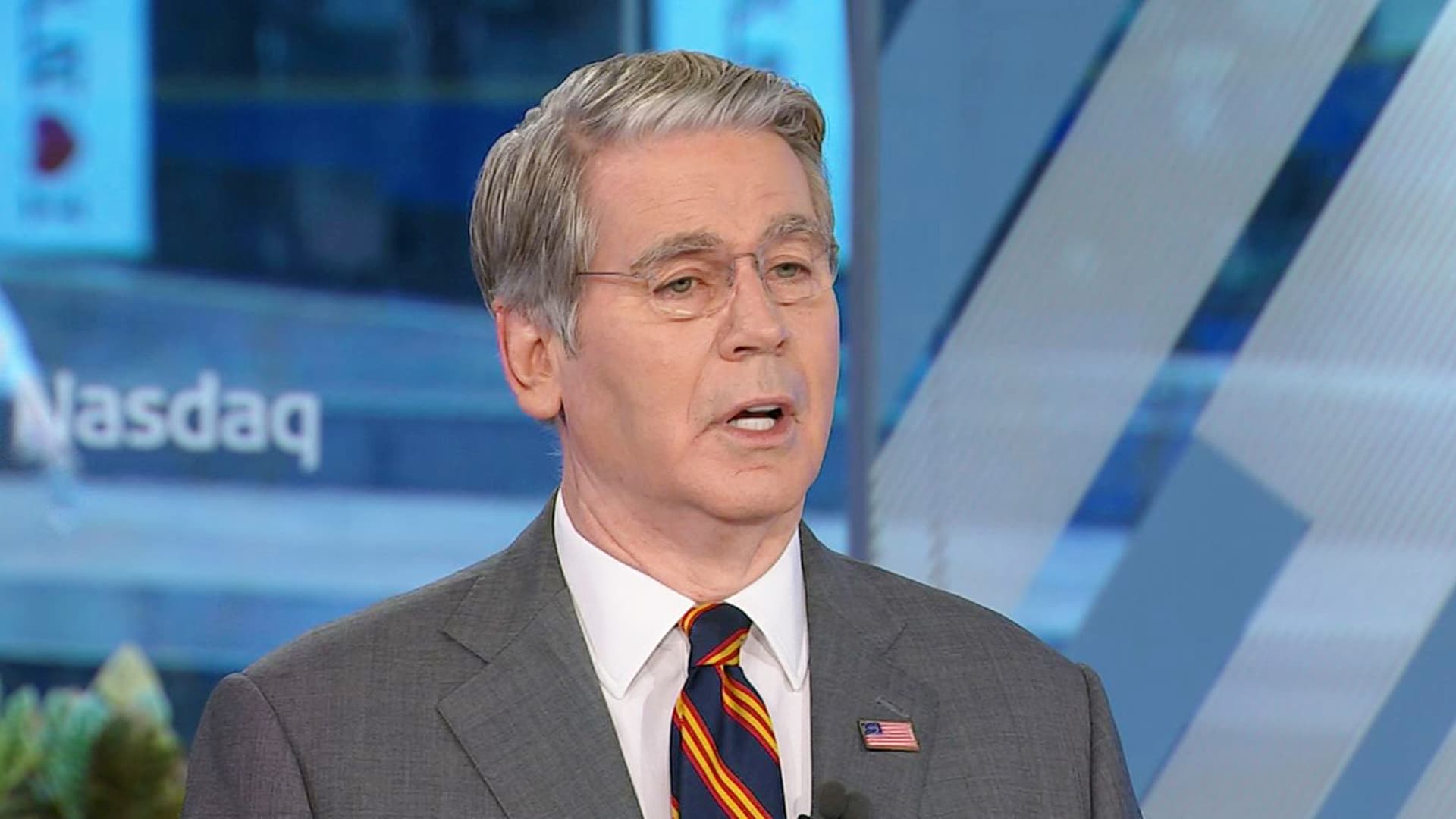
Treasury Secretary Scott Bessent recently characterized the possibility of future Federal Reserve interest rate hikes as not necessarily incorrect. His remarks followed the Fed’s decision to maintain rates during its October meeting, a choice that had garnered widespread market anticipation.
When CNBC’s Brian Sullivan inquired whether such increases might be viewed as a policy error, Bessent responded, “That’s not necessarily so,” indicating his openness to the potential for rate hikes in light of current economic conditions.
Bessent, known as a key advisor to former President Donald Trump, affirmed that both he and Trump have confidence in the Fed’s current leadership under Chair Kevin Warsh. Trump has historically advocated for lower interest rates and previously pressed Bessent’s predecessor, Jerome Powell, on this issue. Bessent acknowledged Warsh’s performance, stating, “I think Chair Warsh is off to a great start,” and expressed his trust in Warsh’s ability to maintain a balance between fostering full employment and ensuring price stability.
In a broader context, the Federal Reserve’s recent decision to keep interest rates steady comes on the heels of its first increase in three years. Market observers largely expect the Fed to resume rate hikes when it convenes again in December.
Bessent emphasized the importance of considering the transitory nature of supply shocks, particularly in relation to rising energy prices. Citing the ongoing conflict involving Iran, he noted that the disruption in global crude oil production has contributed to inflation rates deviating further from the Fed’s preferred target of 2%.
Addressing U.S. economic sanctions on Iran, Bessent described the Efforts, termed “Operation Economic Outcast,” as yielding significant success, with internal projections suggesting a potential contraction of up to 25% in Iran’s economy over the next year.
In a discussion about the bond market and artificial intelligence-related debt, Bessent recognized the trends affecting neocloud firms—businesses specializing in cloud infrastructure to support AI. He reassured that while these companies have faced challenges, he does not view the situation as alarming. “I don’t think it’s problematic at all,” he stated, adding that neoclouds represent a negligible segment of the overall market and that financing activities in other areas continue to thrive.
Looking ahead, Bessent expressed optimism about the upcoming third-quarter GDP figures, expecting them to be robust, although he noted he has yet to see the actual data.
