


When it comes to cryptocurrencies, the misconception that they offer complete privacy is widespread. Major cryptocurrencies like Bitcoin, Ethereum, and Solana operate on public ledgers, exposing transaction details such as amounts, timestamps, and wallet connections. The primary challenge in maintaining anonymity is connecting wallet addresses to real-world identities, which is not immediately visible on the blockchain.
True anonymity in cryptocurrency transactions is less about disappearing completely and more about ensuring that your identity remains unassociated with your wallets. This involves meticulous practices to prevent apps, potential hackers, or curious observers from deducing your identity based on wallet activities. This article serves as a guide to navigating cryptocurrency usage while enhancing your privacy within legal frameworks.
Understanding Anonymous Crypto Use
Using cryptocurrency anonymously implies minimizing the association between your real identity and your wallet’s activities. Blockchain operates transparently, so while the transactions are visible, the key to privacy lies in obscuring your personal information from tracking entities.
The dimensions of cryptocurrency privacy can be segmented into three main components:
- Identity Privacy: Preventing connections between your wallet and identifiable personal information (e.g., name, email, or device).
- Transaction Privacy: Ensuring observers cannot link your deposits, withdrawals, and spending habits.
- Behavioral Privacy: Limiting the ability for observers to analyze patterns from your transaction behavior.
Starting from a clean slate is crucial—moving funds from a recognizable exchange into a new wallet can lead to easier tracking if not managed properly.
Recognizing the Pseudonymous Nature of Crypto
Although crypto addresses seem anonymous, each transaction linked to them is traceable. Visualize a mailbox without a name; it may seem private initially, but as soon as it becomes linked to a person, every subsequent transaction can be tracked more easily.
Consider a case where a donation link is shared publicly. Any funds sent to that address would be traceable back to the original identity, creating a trail of transactions that can compromise privacy.
Practical Tips for Enhanced Crypto Privacy

Utilize Different Wallets for Specific Purposes
Creating distinct wallets for various purposes can greatly enhance your privacy. Aggregating all transactions into a single wallet unnecessarily amplifies risk. By categorizing usage—such as for savings, spending, or decentralized finance (DeFi) applications—you can contain exposure and minimize the tracking of your activities.
An effective categorization might look like this:
| Wallet Type | Purpose | Privacy Benefit |
|---|---|---|
| Long-term Storage Wallet | To hold primary funds | Safeguards savings away from active transactions |
| Spending Wallet | For regular purchases | Limits disclosure of total assets |
| DeFi Wallet | For using decentralized applications (dApps), transactions, and staking | Isolates app-related risks from main assets |
| Public Wallet | For donations and payments tied to public identities | Avoids exposing private funds |
| Testing Wallet | To experiment with new technologies | Contain potential errors |
Utilizing multiple wallets helps limit the scope of potential breaches, thereby protecting your overall privacy.
Avoid Address Reuse
Reusing wallet addresses degrades privacy quickly. Each time funds are sent or received at the same address, it offers another opportunity for tracing back to you. Implement a policy of using fresh, unique addresses for each transaction to secure your anonymity effectively.
Exercise Caution with KYC Exchanges
Exchanges that require Know Your Customer (KYC) protocols can pose privacy risks. After purchasing cryptocurrencies on these platforms, the linked wallet may still be traceable back to you. While certain exchanges provide an easy entry into the crypto world, they do not serve as protective barriers for anonymity.
Best practices dictate:
- Use a dedicated wallet solely for exchanging funds from exchanges.
- Store significant holdings in wallets disconnected from exchanges.
- Refrain from linking exchange wallets to public DeFi platforms.
- Avoid sending funds back to KYC-verified exchanges from public wallets.
Be Aware of Self-Custody Limitations
When managing your own assets, you assume full control, which can enhance privacy if handled correctly. However, weak key management can lead to significant issues. Utilizing wallets that offer complete control and incorporating both hardware (for significant amounts) and hot wallets (for everyday transactions) is advisable.
Essential self-custody guidelines include:
- Maintain confidentiality regarding recovery phrases.
- Avoid storing seed phrases in insecure locations.
- Keeps public wallets distinct from private wallets to avoid unwanted leakage.
- Revoking excess smart contract approvals.
Control IP and Metadata Exposure
Remember that while blockchain data is crucial, other data points can also unveil your identity. For instance, wallet applications can log your IP address and device information, providing additional traces beyond the blockchain.
Mitigate Wallet Fingerprinting Risks
Even new wallets can reveal patterns through transactional behavior, such as the rhythm and amount of transactions or the specific apps used. Break these patterns to enhance anonymity and reduce the likelihood of being tracked.
Be Mindful of Your Public Profile
Utilizing wallet IDs publicly without caution can lead to unintended exposure of personal information. Avoid linking private wallets to identifiable forms such as social media, public NFT collections, or cryptocurrency raffle campaigns.
Understanding Privacy Coins
Privacy coins like Monero or Zcash provide enhanced anonymity features but come with restrictions and potential regulatory scrutiny. While they may offer advantages for privacy-conscious individuals, they are not a foolproof solution against identification.
Cautious Use of Mixers and CoinJoin
Using tools like CoinJoin can obfuscate transaction trails, yet these methods are closely monitored due to their association with illicit activities. Legal landscapes vary, so it is essential to understand the implications before utilizing these tools.
Careful Selection of Transaction Amounts and Patterns
Variability in transaction amounts makes it more challenging to connect different transfers. Avoid consistent transfer patterns, as these can be pieced together by observers, revealing links to your identity.
Segregating Devices and Accounts
To further enhance your privacy, consider using different devices or accounts for various purposes. This separation will minimize the risks associated with unintentional data leakage.
Maintain Organized and Private Records
Maintaining clear and secure records of your transactions, including dates, amounts, and wallet addresses, is essential for managing taxes and organizational purposes without compromising privacy.
Common Privacy Missteps in Crypto Usage
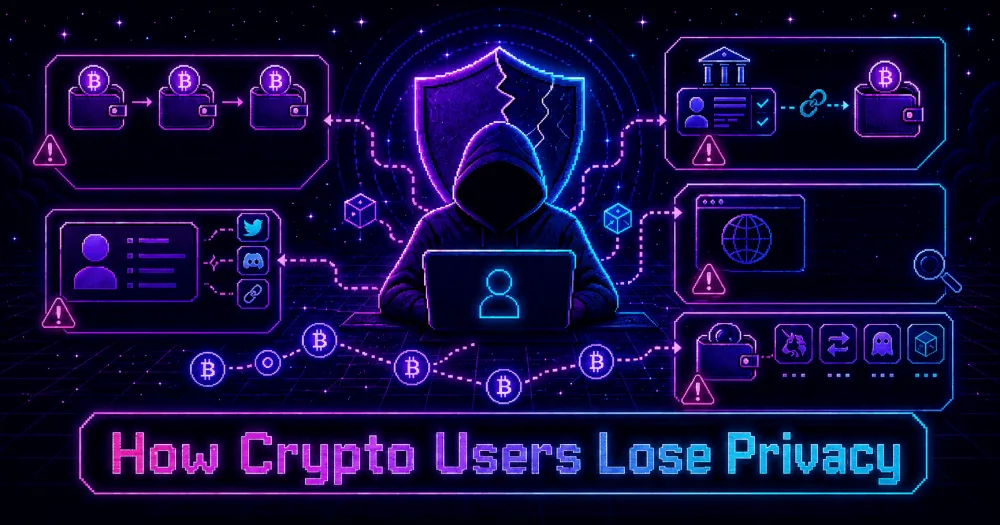
Many users inadvertently compromise their privacy due to recurring mistakes:
- Reusing addresses for multiple transactions.
- Relying on a single wallet for all activities.
- Sharing wallet information publicly.
- Linking wallet IDs to identifiable names.
- Transacting funds from KYC exchanges to public addresses.
- Combining multiple wallets into one.
These frequent errors originate not from dramatic incidents but from neglecting fundamental best practices.
Beginner Privacy Tips
Starting your crypto journey with an effective privacy framework can be straightforward:
- Purchase cryptocurrencies through reputable platforms.
- Withdraw funds to a separate, private wallet.
- Utilize hardware wallets for long-term holdings.
- Separate wallets for daily expenditures and investment strategies.
- Employ unique wallet addresses when possible.
- Avoid associating addresses with identifiable information.
Is Complete Anonymity Possible with Crypto?
Achieving absolute anonymity with cryptocurrencies is impractical due to the intrinsic features of blockchain technology and the potential for entities to monitor transactions. The objective should focus on adopting comprehensive privacy protocols to obscure links between personal and financial identities.
Final Checklist for Ensuring Crypto Privacy
Before conducting any transactions, consider these questions:
- Can this wallet be traced back to my identity?
- Have I used this address in previous transactions?
- Could this transaction reveal my total balance?
- Is there any public wallet involved in this transaction?
- Could the timing or amount expose me to tracking?
- Am I using secure, reputable applications?
- Do I understand the risks associated with what I’m signing?
- Are my savings distinct from my passive transactions?
When in doubt, take a moment to reconsider before proceeding. Mistakes in crypto privacy can have lasting consequences.
Conclusion
Navigating the world of cryptocurrencies often leads to visible records of transactions that remain permanent on the blockchain. To better protect your identity, it is vital to adopt practices that enhance privacy, such as utilizing separate wallets, generating new addresses regularly, securely managing private keys, and minimizing exposure to metadata. While privacy coins and advanced methods may offer further protection, focusing on fundamental strategies is critical for maintaining a secure and private digital presence.
FAQ
Can you use crypto anonymously?
You can enhance your privacy when using cryptocurrencies, but achieving total anonymity is challenging due to public ledger visibility.
Is Bitcoin anonymous?
Bitcoin is pseudonymous; it conceals names but not transaction details. By taking precautionary measures, it is possible to shield identity somewhat.
What is the most effective method for anonymous crypto use?
Clear strategies for privacy include dividing wallets by use case, refraining from address reuse, and keeping personal information separate from wallet activity.
Do privacy coins guarantee anonymity?
While privacy coins improve transaction confidentiality, they do not provide a complete shield against potential tracking due to external factors.
Are cryptocurrency mixers legal?
The legality of mixers varies by jurisdiction; ensure to check local regulations before using such services.
What is the most significant privacy mistake for crypto users?
Consolidating all crypto activity into one wallet is a major oversight, leading to easily traceable transactions.
