


In a significant update from the battleground states, Democratic candidates have showcased a remarkable advantage in fundraising leading up to the midterm elections, outpacing their Republican counterparts by an overwhelming margin. During the third quarter, which spanned from July to September, Democratic candidates participating in over a dozen competitive Senate races amassed an impressive total of $253 million, contrasting sharply with the $56 million raised by GOP candidates, as revealed in recent filings with the Federal Election Commission.
Financial Snapshot of Fundraising
The latest data highlights the financial landscape as Democratic contenders not only raised more funds but also expended considerably larger amounts in their campaigns, reporting expenditures of approximately $300 million against nearly $84 million spent by Republicans. As of the end of September, Democrats entered the final month of campaigning with $87 million in cash on hand, compared to $56 million available for their Republican rivals.
Competitive Dynamics in Key States
In all but one of the 15 races classified as competitive by the NBC News Decision Desk, Republican candidates found themselves outmatched in fundraising by their Democratic or independent challengers. The only exception was Minnesota, where GOP candidates see potential through prospects like former sports broadcaster Michele Tafoya running against Democratic Lt. Gov. Penny Flanagan, as explored by Megan Brand.
Notably, fundraising disparities have emerged strongly in traditionally Republican-leaning states where Democrats have established themselves as effective fundraisers. For instance:
- Texas: Democratic state representative James Talarico raised $60.2 million, while Republican Attorney General Ken Paxton gathered significantly less at $10.2 million.
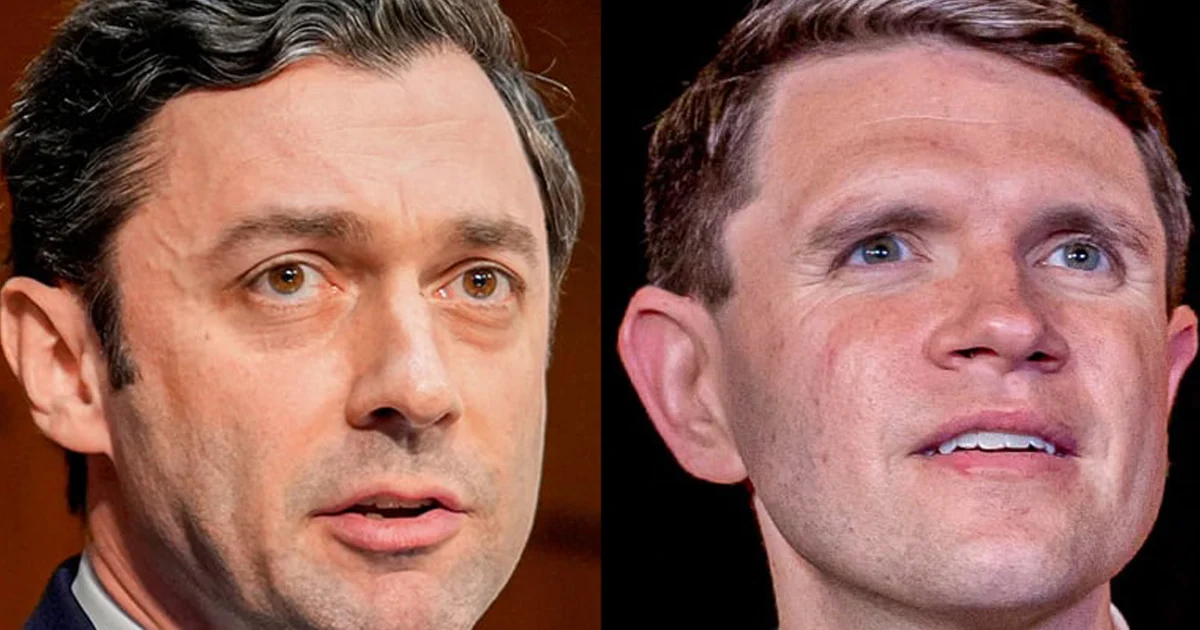
- Georgia: Democratic Senator Jon Ossoff’s campaign raised $33.1 million, compared to Republican Rep. Mike Collins’ $2.8 million.
- Ohio: Former Democratic Senator Sherrod Brown reported $23.1 million in fundraising, while Republican Senator John Husted raised $4.8 million.
This immense fundraising advantage underscores a shifting tide in the race for Senate control, emphasizing a more competitive atmosphere as the midterms approach.
Increased Expenditure by GOP Groups
Faced with lower fundraising totals, Republican outside groups have rapidly mobilized resources, funneling hundreds of millions into advertising in an effort to compete. Notably, tech billionaire Elon Musk contributed an additional $250 million to Republican-aligned groups in recent months, with more than half of that sum, $158 million, allocated to the Senate Leadership Fund, a super PAC associated with Senate GOP leadership. This fund subsequently directed the funds to a Texas PAC supporting Paxton.
While there are benefits to funding candidates directly versus through outside groups, the larger contributions allowed to outside entities could help level the playing field. However, candidates retain better control and generally benefit from cost-effective advertising rates when utilizing campaign funds directly.
Crescendo of Political Tensions
With less than three weeks until Election Day, political tensions are intensifying, reflected in recent campaign debates. Following a contentious exchange, Maine Democrat Troy Jackson urged Republican Senator Susan Collins to “shut up” regarding comments about a protest supporter. An Alaska confrontation saw Republican Senator Dan Sullivan implicate a character flaw in Democrat Mary Peltola’s office amid claims of chaos. In Georgia, Senator Jon Ossoff posed a sharp query to Rep. Mike Collins about his stance as a “white nationalist,” while Collins countered with accusations relating to a notable Democratic donor.
Meanwhile, former President Donald Trump and Vice President JD Vance are reportedly energizing Republican base efforts to reclaim traction through vigorous campaigning, often targeting Democrats with fiery rhetoric. Vance’s derision of Michigan Democrat Abdul El-Sayed as a “little weasel” and Trump’s labeling of him as a “jihadist” exemplifies this trend.
The dynamic tension observable in closing weeks of the election reflects not only Trump’s declining approval ratings but also growing frustration among voters focused on the economy. This has prompted the GOP to reassess strategies, redirecting resources from less promising House races to strengthen positions in favorable districts. Similar trends emerge within Senate strategies, with funds shifting from North Carolina to more competitive areas like Kansas and South Carolina.
Despite these challenges, it remains paramount to note that Republicans still retain substantial financial backing from outside contributors which could bolster their defenses. The evolving political landscape poses a crucial question; whether the current hardships for the GOP will lead to a significant electoral setback or if structural advantages could prevail.
Upcoming Discussions and Insights
These pressures and strategic shifts will be pivotal topics on this Sunday’s episode of “Meet the Press.” Discussion will include insights from Senator Raphael Warnock of Georgia, who is actively supporting Democratic contenders across Southern states, alongside Senator James Lankford of Oklahoma and Treasury Secretary Scott Bessent. This forum will also feature Steve Kornacki unveiling results from the latest NBC News Decision Desk poll.
The political atmosphere remains charged as both parties gear up for what could be a decisive election outcome, and the coming weeks will undoubtedly establish the contours of power in Washington.
