


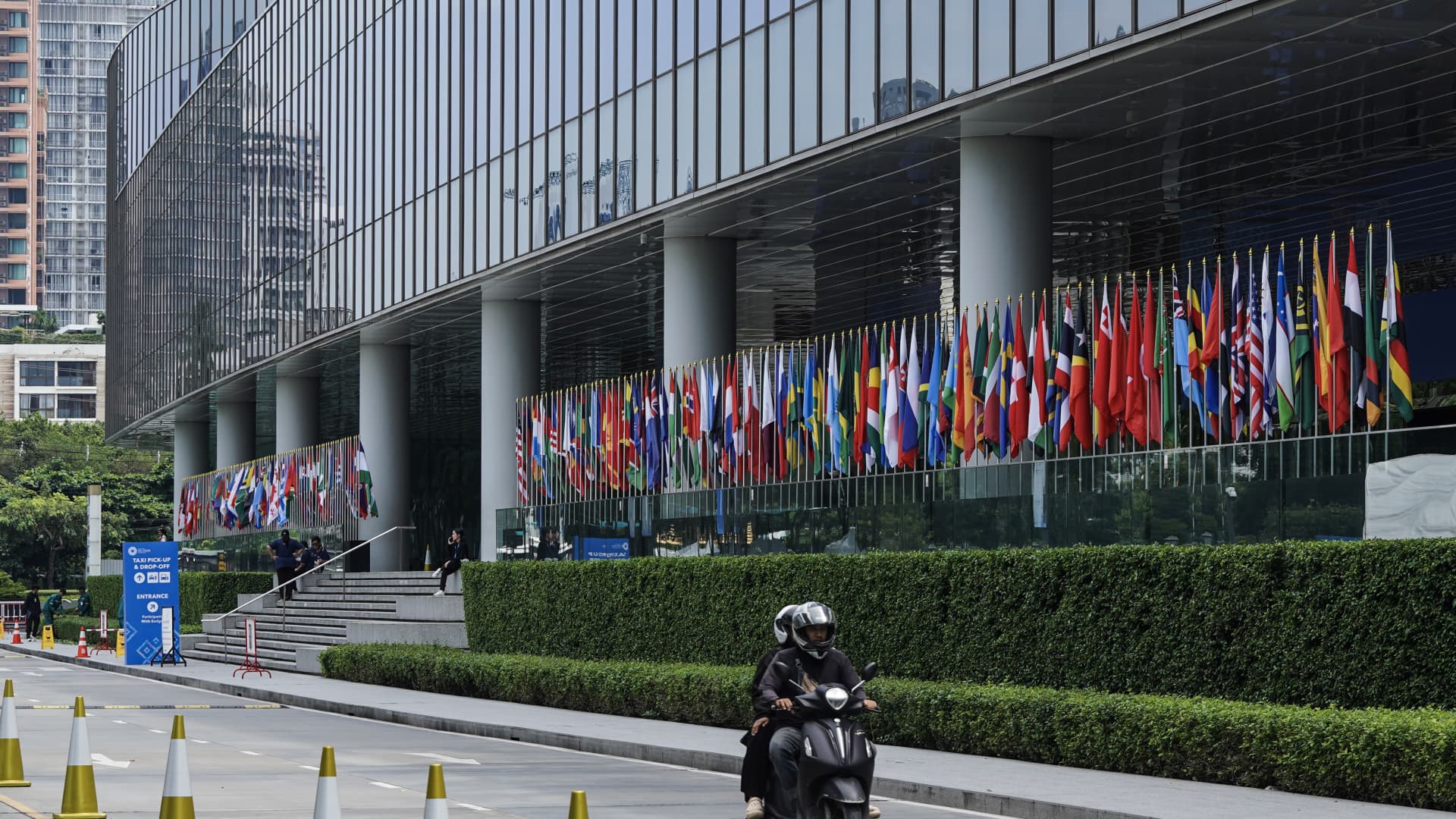
BANGKOK — IMF Adjusts Global Growth Forecast Amid AI Investment Surge
The International Monetary Fund (IMF) has updated its projection for global economic growth, expecting a 3.1% increase in 2026, an improvement from the previous estimate of 3% released in July 2026. However, this forecast remains lower than last year’s growth rate of 3.5%. The IMF anticipates a steady growth rate of 3.4% for 2027.
Inflation Estimates and Energy Markets
For inflation, the IMF predicts a rate of 4.1% in 2027, slightly higher than the 3.9% it estimated in July. This adjustment comes amid expectations that conditions in the Strait of Hormuz will normalize by October 2027, following a reopening anticipated in March 2027. In September, Gulf crude exports reached 88% of pre-conflict levels, signaling a recovery in the oil markets.
This information was disseminated during the annual meetings of the IMF and the World Bank in Bangkok, where discussions among finance ministers and central bank governors highlighted ongoing geopolitical strife, rising public debt, and the transformative impact of artificial intelligence.
Impact of AI Investments
The rise of AI-related investments has provided a significant “demand impulse,” allowing economic performance to exceed initial expectations despite the ongoing tensions in the Middle East and existing trade disputes. Financial markets currently exhibit a level of stability, which the IMF attributes, at least in part, to enthusiasm surrounding AI advancements.
According to the IMF, diversification strategies, such as alternative energy sourcing and strategic reserve utilization, have helped to mitigate the adverse effects triggered by recent geopolitical disturbances. Nonetheless, these buffers are diminishing rapidly, with the global oil supply reportedly declining by roughly 2.7 million barrels per day, a trend that could lead to increased price volatility.
Uneven Economic Growth
Looking at the broader economic landscape, the IMF notes a trend of uneven growth across various regions. The organization highlights that a mere 32 nations are now responsible for 95% of global economic growth, a notable decrease from 54 economies identified in April. Countries less affected by the conflict in the Middle East and more engaged with AI-driven demand are exhibiting stronger growth trajectories.
- Taiwan: Projected growth of 10.7% for this year, buoyed by semiconductor demand.
- South Korea: Expected growth of 3.3%, a significant increase from 1.1% in 2025.
- United States: Anticipated growth of 2.3% for both 2026 and 2027, underpinned by consumer spending and AI investments.
Conversely, energy-importing nations that are outside the tech supply chain are grappling with increased import costs and diminished fiscal capabilities. For instance, the eurozone is projected to achieve just 1.1% growth this year due to escalating energy expenses and low consumer confidence. Meanwhile, emerging markets and nations in Central Asia, such as Bahrain and Iraq, are expected to experience negative growth this year but forecast significant rebounds in 2027.
Potential Risks Linked to AI Investments
While the investment in AI has contributed positively to economic resilience, it may also introduce inflationary pressures and financial instability, warns the IMF. The report characterizes this investment wave as a “front-loaded demand shock,” with massive capital influx into essential sectors like semiconductors and data centers occurring before substantial productivity gains can be realized.
A potential reevaluation of the profitability and productivity connected to AI could lead to market corrections. The IMF cautions that if anticipated productivity gains do not materialize, U.S. equities could fall by as much as 20%, resulting in global growth estimates falling 1.1% short of baseline projections by 2028.
Rising Fiscal Challenges
With inflation reaching multidecade highs and fiscal concerns driving up borrowing costs, the IMF reports that the fiscal landscape is becoming increasingly burdensome. It is projected that public debt in advanced economies will rise to 115% of GDP by 2031, up from 108% in 2025. In emerging and developing markets, this figure is expected to increase from 74% to 84%.
Governments now face larger primary deficits than pre-pandemic levels while encountering rising real interest rates and shorter debt maturities amid escalating defense expenditures. The IMF emphasizes the urgent need for fiscal reconstruction, recommending that government support for households dealing with rising energy and food costs be “temporary, targeted, and nondistortionary.”
As the global inflation probability for 2027 rises to 35%, up from 30% in previous estimates, the IMF concludes that the risks remain “tilted to the downside.”
