


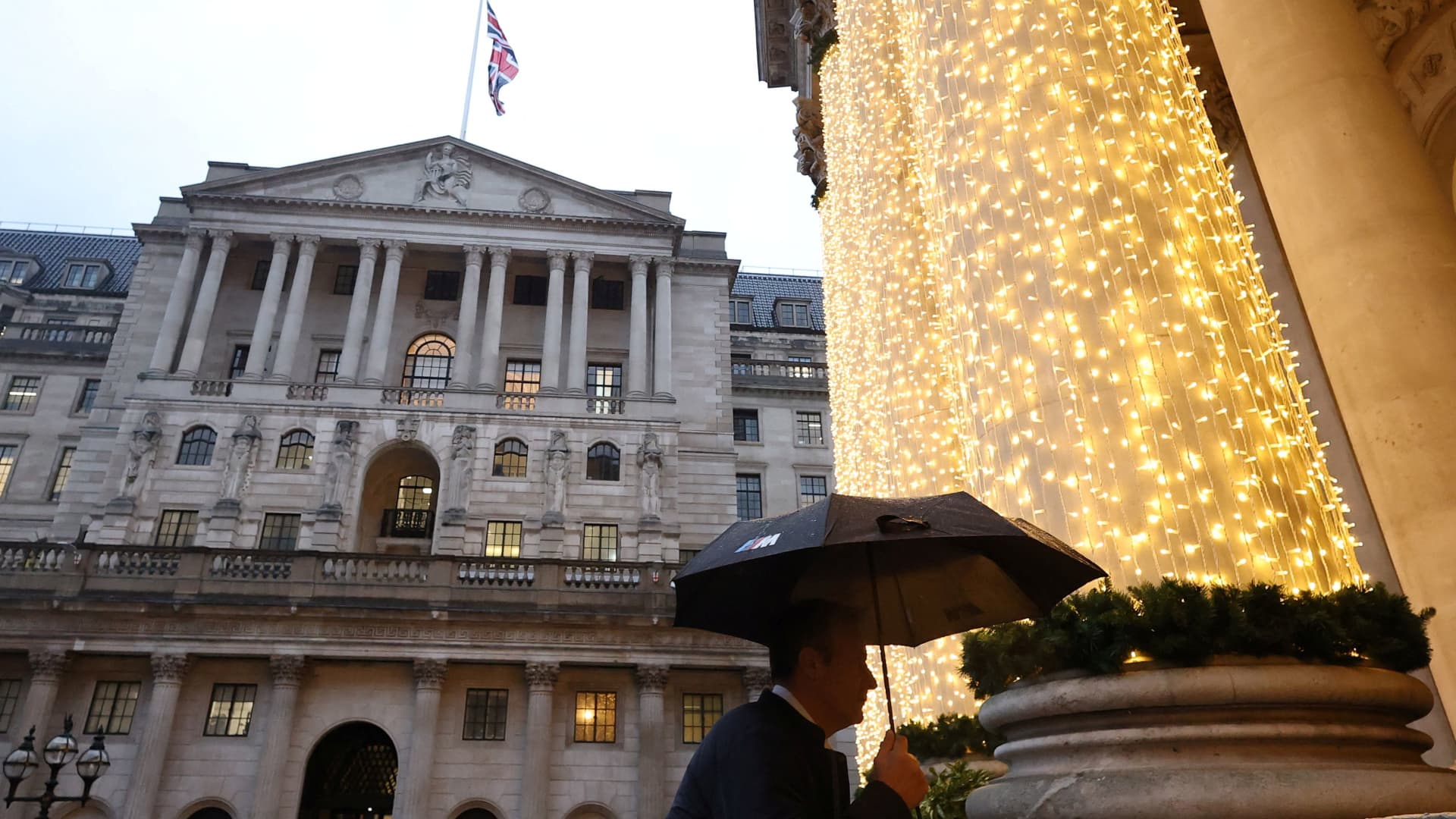
A person takes shelter from the rain while walking near the Bank of England building on the day the Monetary Policy Committee lowered interest rates on December 18, 2025 in London, United Kingdom.
Toby Melville | Reuters
Official figures on Wednesday showed Britain’s inflation rate remained at 2.8% in May, slightly lower than expected.
Economists polled by Reuters had expected annual inflation to rise to 3% in May.
Inflation fell to 2.8% in April, but the decline was expected to be short-lived due to changes to Britain’s regulated energy price cap. The price cap is set to rise by 13% later this summer, when energy costs hit a two-year high.
The UK’s inflation rate in May was lower than the Eurozone’s May inflation rate of 3.2%, and was also significantly lower than the US inflation rate of 4.2% in May.
Britain’s Office for National Statistics said on Wednesday that transport was the biggest driver of price increases in May, but this was partially offset by lower prices for food and non-alcoholic drinks.
Travel costs for Britons rose in May due to higher airfares, motor fuel costs and boat fares, which rose 10.3% on the previous month, the ONS said. Analysts said the timing of the Easter holiday may have contributed to higher fares this year.
Meanwhile, petrol prices rose by an average of 0.6 pence (0.8 US cents) per liter from April to May. In the same period last year, average petrol prices fell by 2.1p. The average price rose to its highest level since November 2022, when energy prices soared following Russia’s full-scale invasion of Ukraine.
At its recent meeting, the Bank of England Monetary Policy Committee voted to keep the key interest rate unchanged at 3.75%.
“Monetary policy cannot influence energy prices,” policymakers said at the time, citing the impact of the U.S.-Iran war that has sent oil and gas prices soaring for months amid the closure of the Strait of Hormuz.
Markets have priced in a 95% chance that the Bank of England will leave interest rates unchanged at its next meeting on Thursday, according to LSEG data, but traders expect the bank to raise rates by the end of the year.
Scott Gardner, investment strategist at JPMorgan Personal Investing, said in a note Wednesday morning that the latest figures “provide some hope that the recovery in UK inflation may be short-lived.”
Last weekend, the United States and Iran announced a framework agreement to end their nearly four-month war, and both U.S. President Donald Trump and Iranian officials said the Strait of Hormuz would reopen after the deal is signed in Geneva later this week.
Mr Gardner said: “Upcoming statistics may point to an upward trend in energy trends, but many will be keeping an eye on how Ofgem’s price caps will affect inflation statistics and household spending in the coming months.”
“For Bank of England policymakers, who are nearing their next interest rate decision, this change in inflation could make it easier to decide to leave rates unchanged in the short term. With continued instability in the Middle East and price pressures continuing, policymakers are likely to remain in ‘wait-and-see’ mode.”
Correction: This article has been updated to reflect that inflation reached 2.8% in May.
