

Close Menu
Cryptosphere Update
  • Crypto News
  • Economy
  • Crypto Markets
  • World News
  • Technology
  • Breaking Views
What's Hot

Kimi Antonelli wins F1 Monaco GP after crash and red flag

June 7, 2026

At least 12 people shot near Ohio festival, gunman still at large

June 7, 2026

Ethereum breakdown warning: this major level could trigger further downtrend

June 7, 2026
Facebook X (Twitter) Instagram
Trending
  • Kimi Antonelli wins F1 Monaco GP after crash and red flag
  • At least 12 people shot near Ohio festival, gunman still at large
  • Ethereum breakdown warning: this major level could trigger further downtrend
  • Why ceasefires won’t stop deadly attacks in Gaza, Lebanon and the Gulf
  • Want to join SpaceX? Kraken opens early IPO access via xStocks
  • Graham Platner joins campaign amid controversy: “Maine has my back”
  • Hyperinflation in Kindergarten in 1971
  • Brendan Banfield sentenced for elaborate double murder plot involving au pair
Facebook X (Twitter) Instagram
Cryptosphere Update
  • Crypto News
  • Economy
  • Crypto Markets
  • World News
  • Technology
  • Breaking Views
Crypto Heatmap
Cryptosphere Update
Home » How is the Iranian oil crisis different from the stagflation of the 1970s?
Economy

How is the Iranian oil crisis different from the stagflation of the 1970s?

Leslie StewartBy Leslie StewartMarch 13, 2026No Comments3 Mins Read
Facebook Twitter Pinterest LinkedIn Tumblr Email
How is the iranian oil crisis different from the stagflation
Share
Facebook Twitter LinkedIn Pinterest Email

Important points

Rising oil prices have destabilized markets over the past week on concerns about rising prices and slowing economic growth. While investors are concerned about fears of stagflation and what it means for their portfolios, 2026 looks different than the 1970s for several reasons. At the time, high oil prices led to impressive gains for gold, spurred by a weaker dollar, but this has yet to happen.

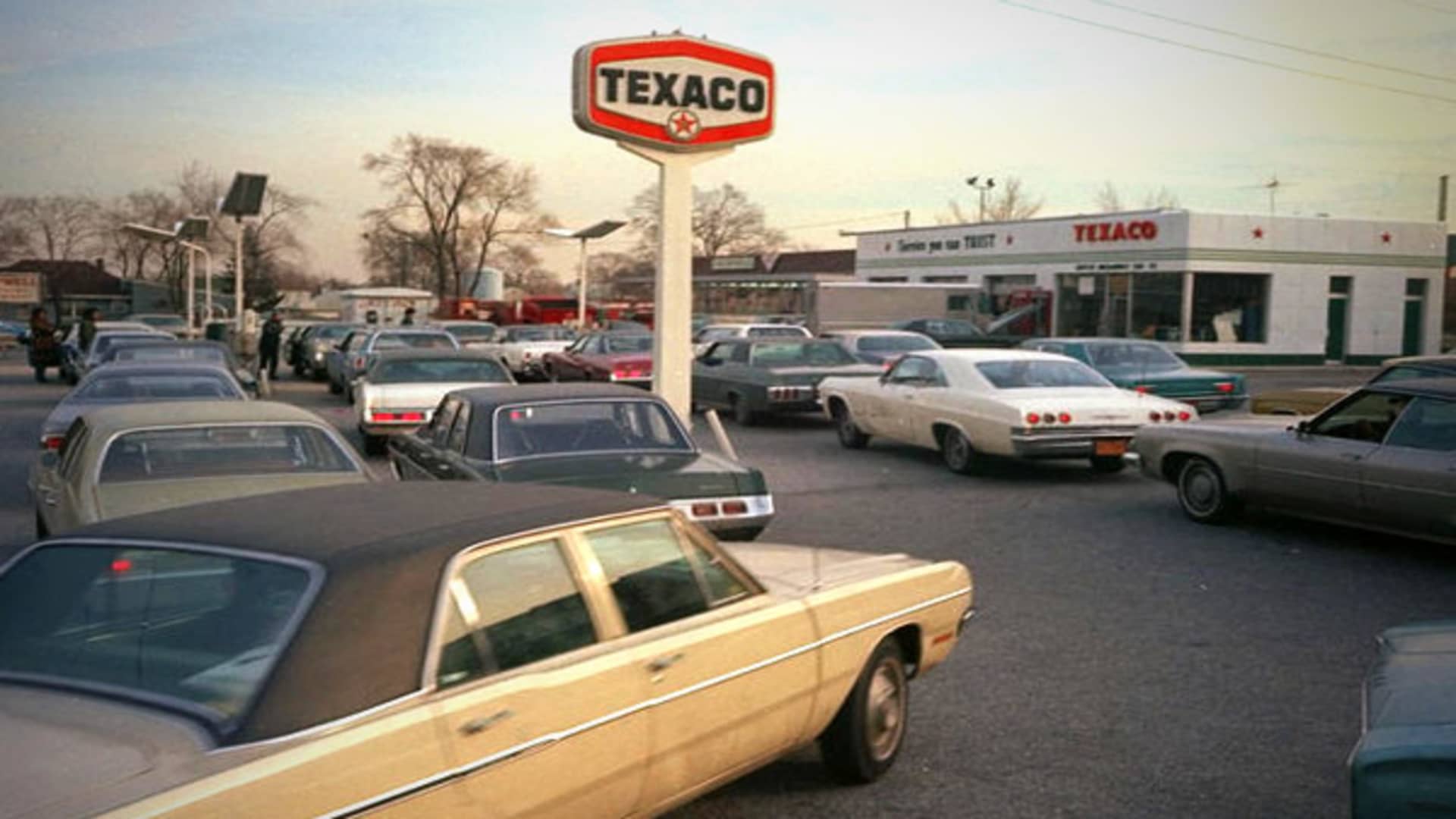
The war between the United States and Israel against Iran has shaken up markets and caused oil prices to soar, raising concerns about stagflation similar to that seen in the 1970s. The toxic combination of high inflation and slowing growth is often a tricky cocktail for both stock and bond markets, but after Russia’s invasion of Ukraine sent oil prices above $120 a barrel, stocks fell in tandem through 2022. For investors fearful of stagflation and what it could mean for their portfolios, history may provide some answers. In 1973, the OPEC oil crisis and coinciding recession caused the S&P 500 index to plummet by more than 40%, resulting in a decade of lost returns for large-cap stocks, according to Capital Economics. Some investors are drawing comparisons to the 1970s to interpret the direction of the market in 2026, but there are some important differences to note this time. Lessons from Gold and Small Caps The recent rise in oil prices, supported by a weaker dollar, did not produce spectacular returns for gold investors, as was the case in 1973. In fact, the dollar has appreciated against most major currencies. “Gold may be a good hedge against uncertainty, but I think a lot of investors weren’t prepared for the fact that they don’t really like a stronger dollar this time around,” Gum’s head of multi-asset Julian Howard told CNBC in an email. He said the United States is now the world’s largest oil producer and the world’s largest exporter, meaning the country is less susceptible to supply constraints in the Middle East. @LCO.1 YTD Mountain Oil Prices “Higher oil prices have improved the terms of trade for the US economy, pushing up the dollar and in turn weighing on gold,” he added. In the 1970s, stock prices of small and medium-sized companies also soared. From 1975 to 1977, it was the best performing asset class for three consecutive years, according to an analysis by BofA Global Research. Howard said this performance only came after a “brutal” market crash. Howard said that to expect small-cap stocks to outperform in the 2020s would involve a recovery phase from a market crash, something that hasn’t happened yet. Charles-Henry Monchau, chief investment officer at Syz Group, said the 1970s were marked by entrenched far-above-target inflation, stagnant growth and broken policy frameworks, none of which exists today. “This is not the 1970s, but it may be the beginning of something relatively important,” he wrote in a recent note. “(It) could mean a sustained regime shift from paper assets to physical assets and a long-overdue repricing of the physical economy that underpins everything else.” Montchaux told CNBC that the main beneficiaries of the rotation from mega-cap tech stocks to hard assets could be physical assets and related industries such as energy, copper, steel and critical minerals. For now, oil prices remain below the highs experienced after the Russian invasion and the OPEC crisis. Brent futures were down 0.7% at $99.78 a barrel as of 10:10 a.m. ET. The U.S. closed above $100 on Thursday. West Texas Intermediate crude oil futures fell 1.3% to $94.42 a barrel.

1970s Crisis Iranian Oil stagflation
Share. Facebook Twitter Pinterest LinkedIn Tumblr Email
Leslie
Leslie Stewart

Related Posts

Employment statistics for May will be released on Friday. Here’s what you can expect

June 4, 2026

Long-term unemployment is rapidly increasing in the United States, hurting workers and the economy.

June 4, 2026

ADP Employment Report, May 2026: Payrolls increase by 122,000

June 3, 2026

US proposes new tariffs to 60 countries over forced labor trade practices

June 3, 2026
Add A Comment

Comments are closed.

Popular Posts

Department of Justice removes press release regarding charges against January 6th rioters

May 23, 2026

November 19, 2025

DappRadar reports record sales of 18 million units in 2025’s largest market revival

October 11, 2025

Openai breaks through image reasoning and announces O3 and O4-Mini

April 16, 2025
Latest Posts

Kimi Antonelli wins F1 Monaco GP after crash and red flag

June 7, 2026

At least 12 people shot near Ohio festival, gunman still at large

June 7, 2026

Ethereum breakdown warning: this major level could trigger further downtrend

June 7, 2026

Subscribe to Updates

Subscribe to our newsletter and stay updated with the latest news and exclusive offers.

About
About

At Cryptosphere Update, we are dedicated to bringing you in-depth coverage of the rapidly evolving crypto landscape, from market trends and emerging blockchain projects to regulatory developments and expert analysis. Our mission is to keep you informed and ahead of the curve in the ever-changing world of digital assets.

Facebook X (Twitter) Instagram Pinterest YouTube
Don't Miss

Kimi Antonelli wins F1 Monaco GP after crash and red flag

June 7, 2026

At least 12 people shot near Ohio festival, gunman still at large

June 7, 2026

Ethereum breakdown warning: this major level could trigger further downtrend

June 7, 2026
Newsletter

Subscribe to Updates

Get the latest creative news from FooBar about art, design and business.

© 2026 Cryptosphere Update. All Rights Reserved.
  • About Us
  • Contact Us
  • Privacy Policy
  • Terms and Conditions
  • Disclaimer

Type above and press Enter to search. Press Esc to cancel.